
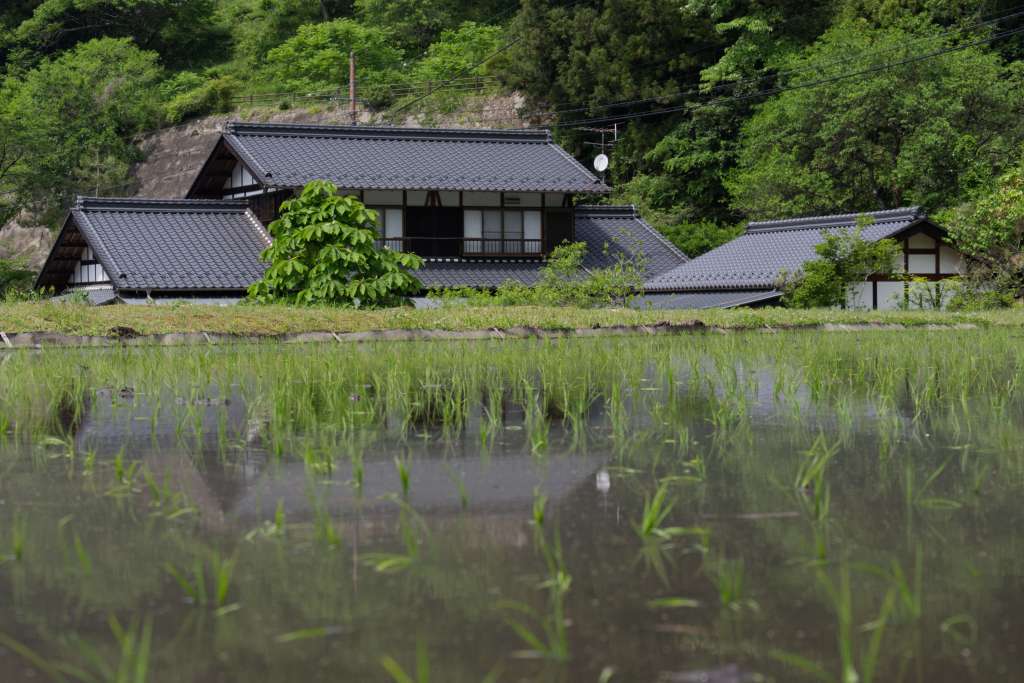
After four days in Tokyo, mostly spent in parks and at the inevitable Shibuya Crossing, we leave the city and take the train back out to Nikko, where we had left our car. I am exhausted from the city and happy to be back in nature. In the evening, we walk through the worldheritage temple site, which is now deserted and peaceful.
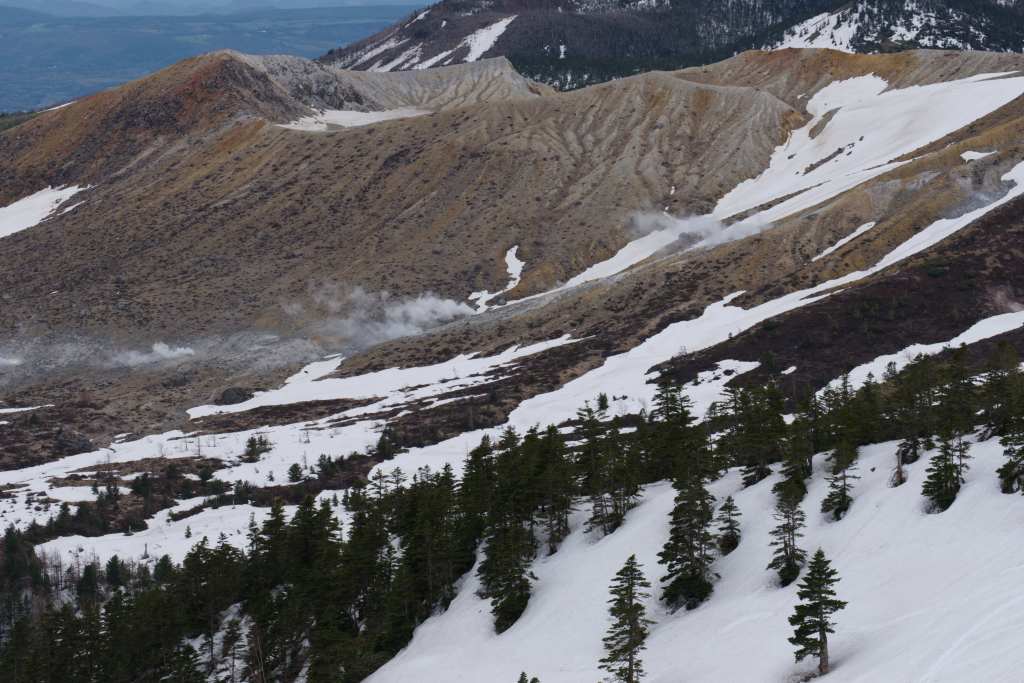
Our route takes us through Lake Chuzenji, where we had celebrated my birthday a week earlier. The weather is closing in, but we still walk a bit in the marsh, now in a mystical mist, and later through Joshinetsu Kogen National Park. We can already spot the Japanese Alps, the peaks still covered in white, waiting for us not to climb them. Unfortunately, we are too early in the season for regular hiking, but we hope to hike at lower elevations.


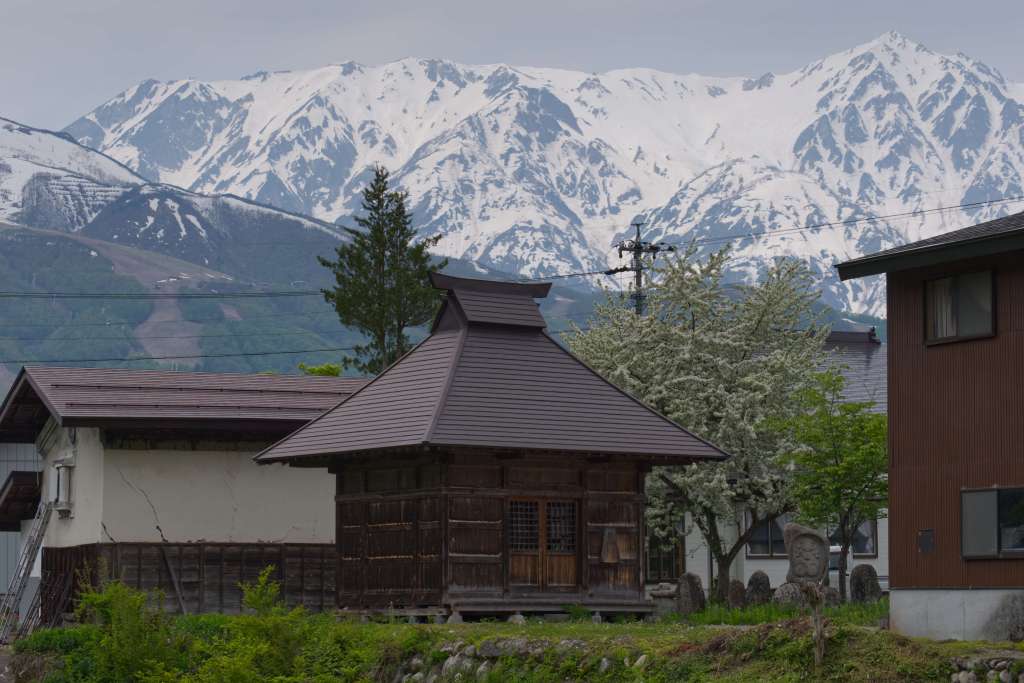
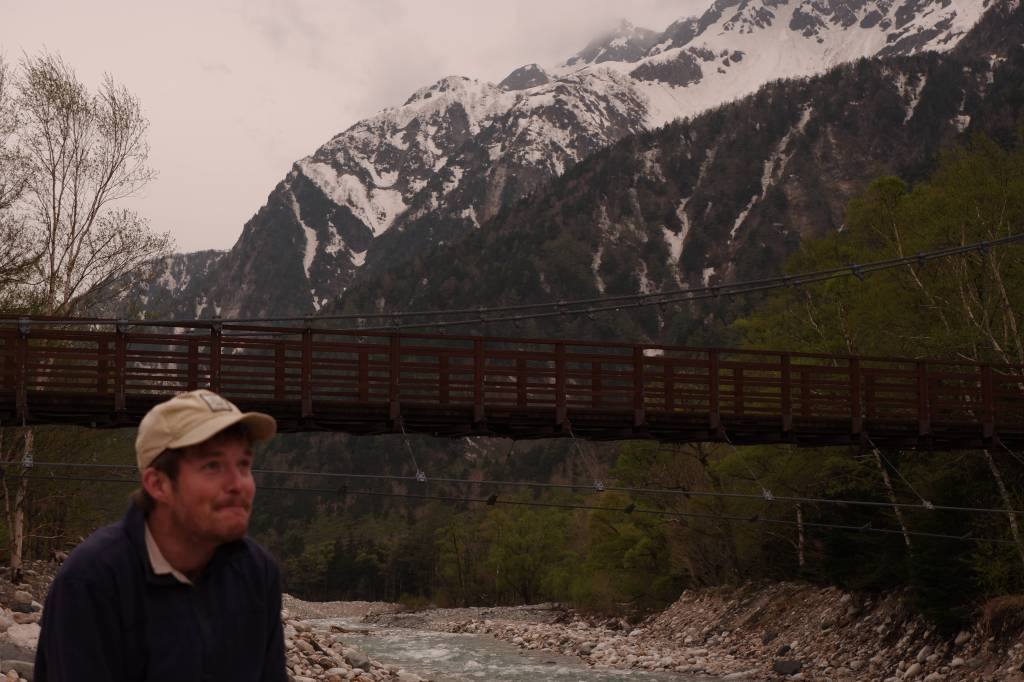
We walk around Hakuba, another ski resort we had considered for our season. It is very lovely—more local, and barely any big hotels can be found. Should we do another season, this would probably be our choice. Now, the town is quiet. Locals are tending their garden, preparing for the summer, and the few tourists who have come can be found around the Ohashi Bridge.
After exploring the town, we head toward a lake not far from it. The day is hot and perfect for our first swim of the year! Near the freezing water of the mountain lake, with views of the Japanese Alps in the background, we spend the late afternoon making pancakes before finding a spot to spend the night.


Hakuba marks the start of a beautiful section of our road trip. From there on, we pass through Azumino, where we spend most of the day in the Alps Azumino National Government Park. The next day is rainy, so we skip the Wasabi Farm we had planned to visit and run a few errands while heading to Matsumoto. The afternoon clears up, and we walk around Matsumoto’s famous castle, one of the four national treasure castles in Japan, and the picturesque shoppingstreet of the town. In a tiny restaurant with maybe eight seats, an elderly man serves us delicious ramen as well as homemade gyozas. We’ve been in Japan for already eight months and have eaten ramen a lot, but it just never gets old.
The night is spent just outside of town, toward Kamikochi, a remote hiking area in the Japanese Alps. Only accessible by bus or taxi, we found the most economical way to get there was to take the bus at Sawando Station. We pack our backpacks and leave RokkyPokky. The area in Kamikochi is beautiful, a long valley surrounded by peaks up to 3000 meter high. However, it is made accessible for every level of fitness and experience and is therefore extremely crowded—already now, in May. The main path leads along the river, through the valley and back on the other side. There are a lot of ice cream and food places—more than necessary, in our opinion. The further you walk from the bus terminal, the fewer people you encounter, and we end up almost alone at the furthest campground.
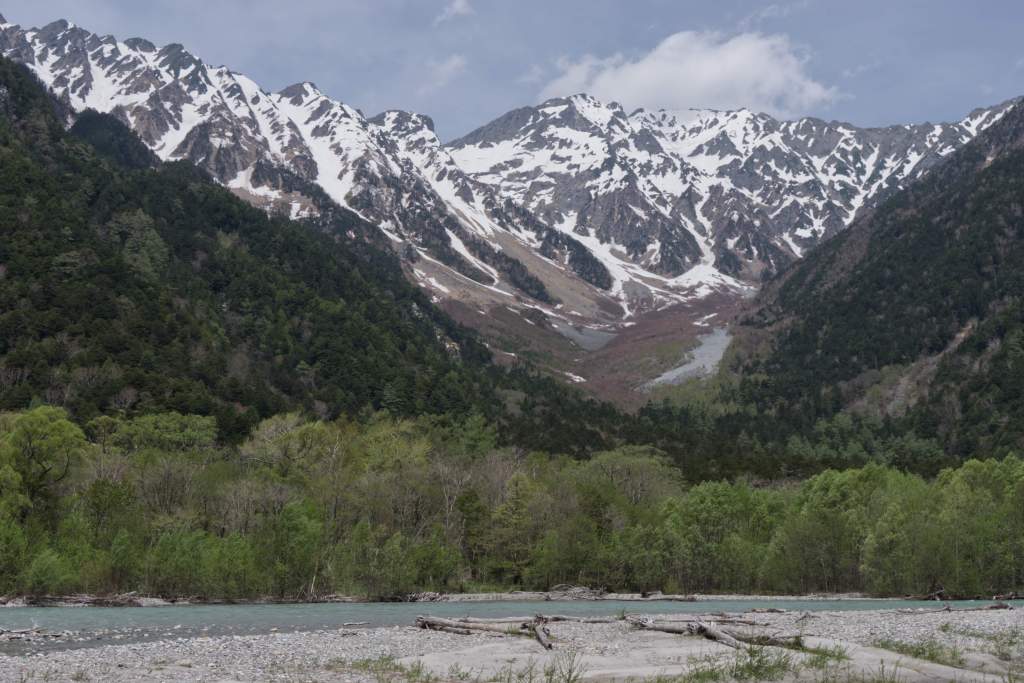
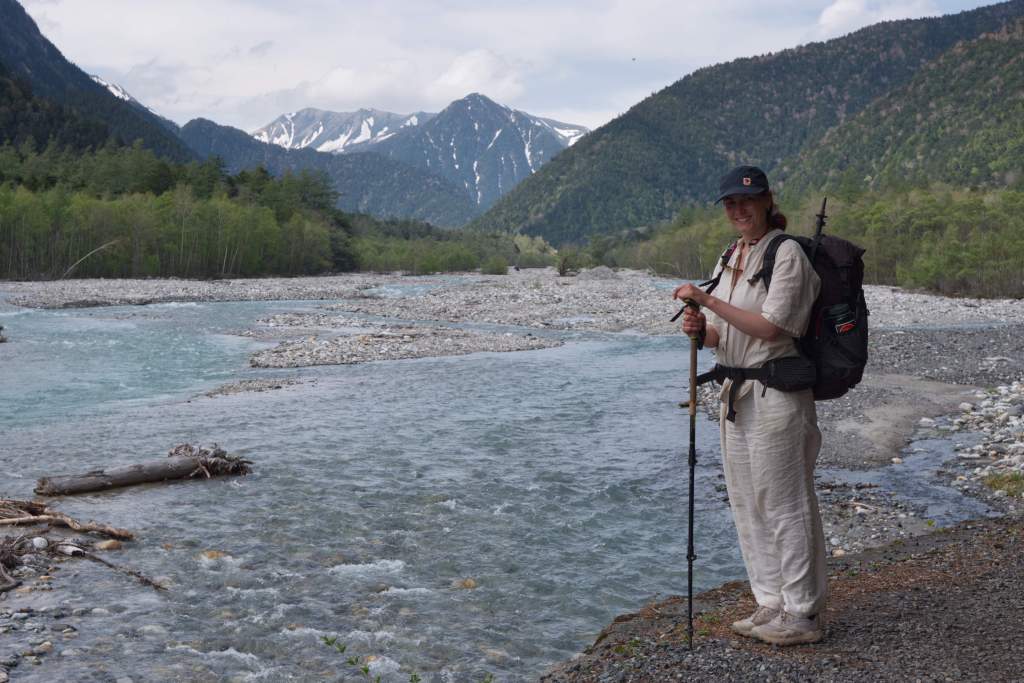

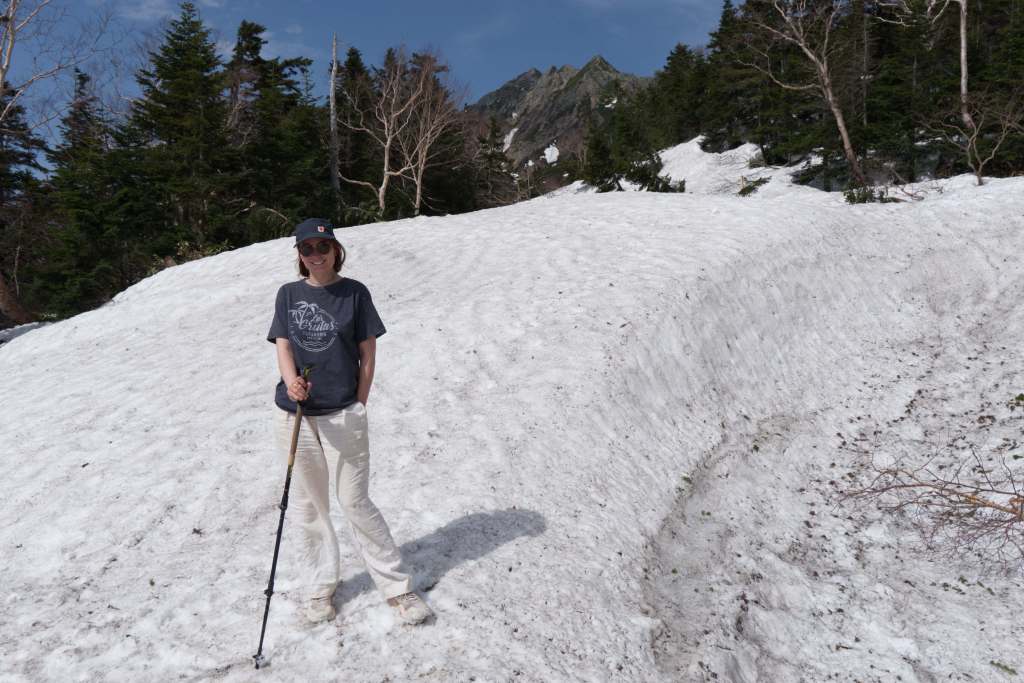
The real hiking starts when you get on a trail uphill leaving the crowd behind. In summer, it must be beautiful walking along the mountain ridges that overlook the busy river walk. For this, we are too early, but we spontaneously decide to try to reach Mount Nishiho (2674 m.a.s.l.). After a 1,000 m elevation gain, we make it to the hut (2360 m.a.s.l.) beneath the peak, but time is pressing, and half the trail is covered in snow, making us slow. We have to turn back, but before we do, we enjoy an avocado toast in the sun. Between carefully anchoring our heels in the snow and intentionally sliding down, we make it back to the terminal just in time to catch the bus out, back to RokkyPokky.
More accidentally than planned, we spend some time relaxing in the park of Narai before deciding to walk through the village’s main street. What a good idea! Narai is part of the Nakasendo, the old route connecting Edo (old Tokyo) and Kyoto, and was an important stop for travelers to rest before tackling the pass ahead.


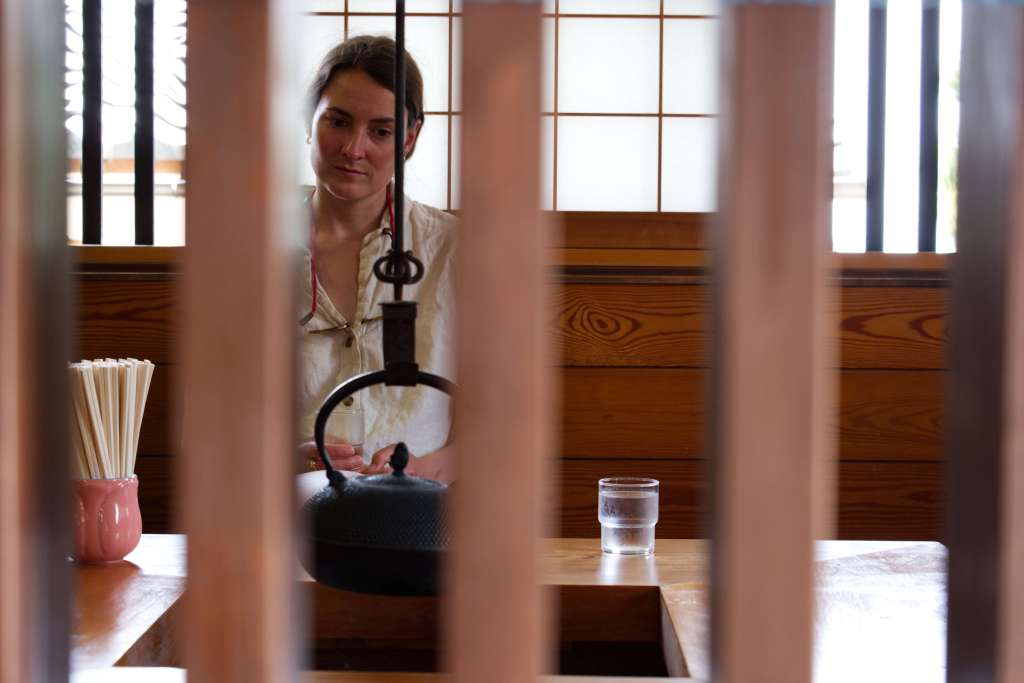
The village’s main road is preserved and almost deserted too. Only a few stores are still open, and we walk through the street just enjoying the restored wooden buildings. The lack of tourists is amazing and makes it possible to truly enjoy the place and imagine how it must have looked, smelled, and sounded during its heyday in the Edo period.
We chat with an old lady selling prints of her late husband’s paintings and buy a few gifts to bring back home. The next day, two other villages of the Nakasendo are waiting for us. This time, we blend into the mass of Westerners. A bus full of us brings us to Magome—similarly beautiful to Narai—from where we plan to walk back to our car in Nagiso. The 12 kilometers take us only three hours. With that many people having the same plan, our pace is quick, overtaking groups to find some quiet.
The most well-known part is the walk between Magome and Tsumago. Once we pass Tsumago toward Nagiso, we suddenly find ourselves alone again. The day is hot, and our car is parked close to the river. It feels so good to dip into the cold water and wash away the sweat and dust of the day before moving on.
In the afternoon of the next day, we arrive in Takayama. For two hours, we ride around this cute but busy town on our rented bicycles. We spend the night nearby, as we want to be at the morning market early the next day. At 7:30, the market is still quiet, with few stands open and a somewhat disappointing selection. The main attraction for us this morning is the bakery Le Pain Mujo. We wait half an hour before they open, and then another half hour for the baguettes to be ready. It is so worth it! How we miss good bread. The girls selling the bread and pastries laugh at our (especially Honza’s) excitement, and as always in good bakeries, we leave behind a nice sum.
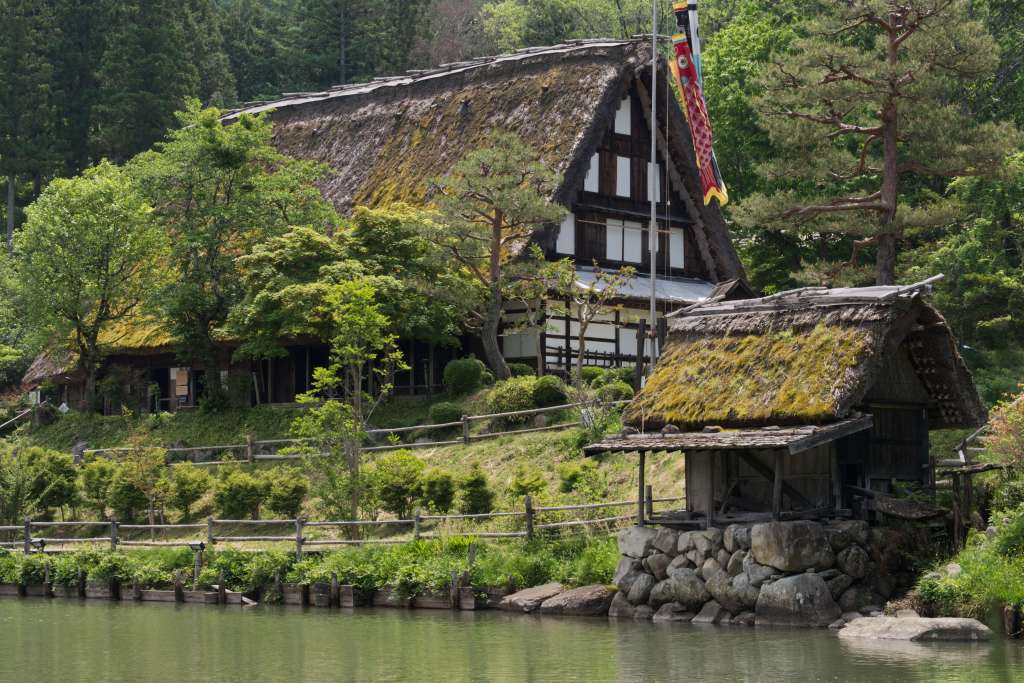
We spend the rest of the morning at the open-air museum nearby. We are very impressed by the work done here. Multiple houses from the region have been dismantled and rebuilt in this village to preserve them as cultural heritage. Some were saved from being drowned in areas flooded for dam construction. We usually feel that there is never enough explanation about the places we visit, but here we are positively surprised. Explanations about the woodwork as well as the silk production, for which the region was famous, are extensive. Each step of the silk production is explained, and the instruments are displayed. It’s fun to walk through this museum village, going into the different houses and imagining the life of people that have lived there.
The Hida region, in which Takayama lies, is famous for its Hida beef. The usual way in Japan is to cut the beef thin and either barbecue it (yakiniku) or dip it in hotpot (sukiyaki). Honza, however, wants a nice, thick steak. We buy a few good cuts at the supermarket and settle down in a park outside the city with our gas cooker. The delicious baguette, a fresh tomato salad, and the most tender, melting steak are a culinary highlight. After a needed rest, we walk through Hida-Furukawa. Very close to Takayama, this little town is a good alternative for people looking for less touristic places. On our afternoon walk, we do not encounter any Westerners, only a few locals.
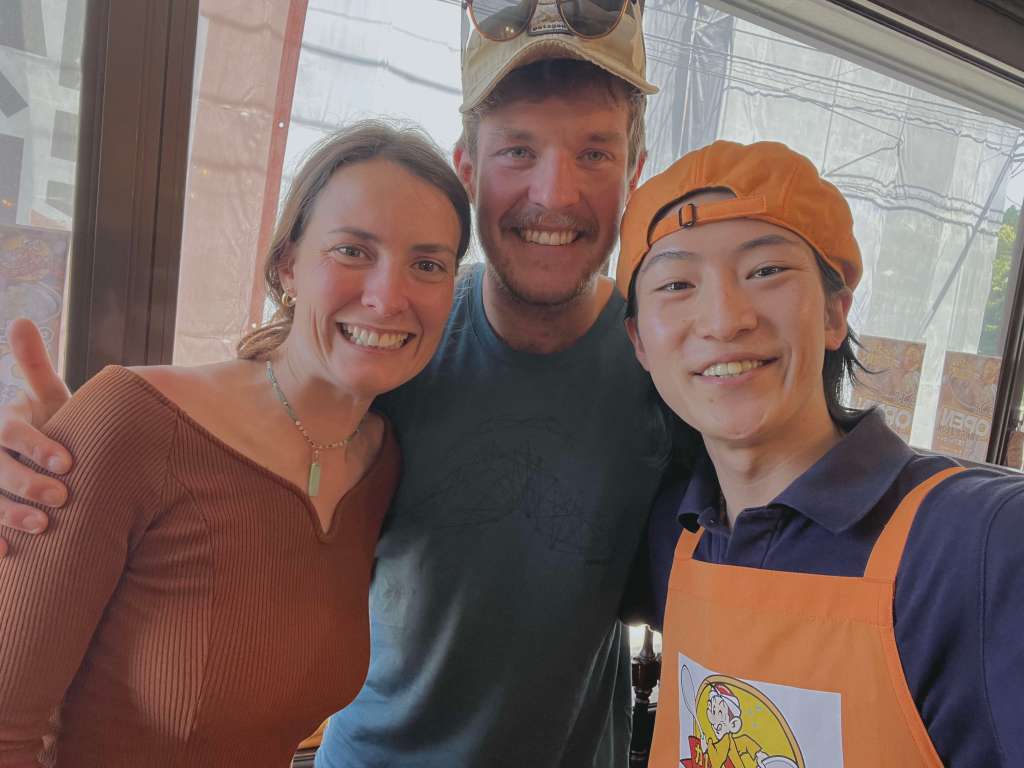
We head north towards the Noto Peninsula. Two rainy days are spent in the beautiful Toyama library before the sun comes back out and we start to drive around the peninsula. Our first highlight along the coast comes in the form of an ice cream sign on the side of the road. We turn back to follow this promising lead and end up with the most delicious ice cream we probably had during our whole stay. Malga Gelato is definitely a recommendation from us; all flavors were delicious, especially Noto salt. A day later, we make ourselves comfortable under a tree at a beach in a small little village and spend most of our day there. On a quest to find drinkable water, Honza meets Yokey. He comes back with water AND a place to eat. Yokey owns a little restaurant and has impressive stories to tell while we eat a delicious katsu curry. He crossed Australia on a scooter. Not a motorized one, just a footboard and a handle!
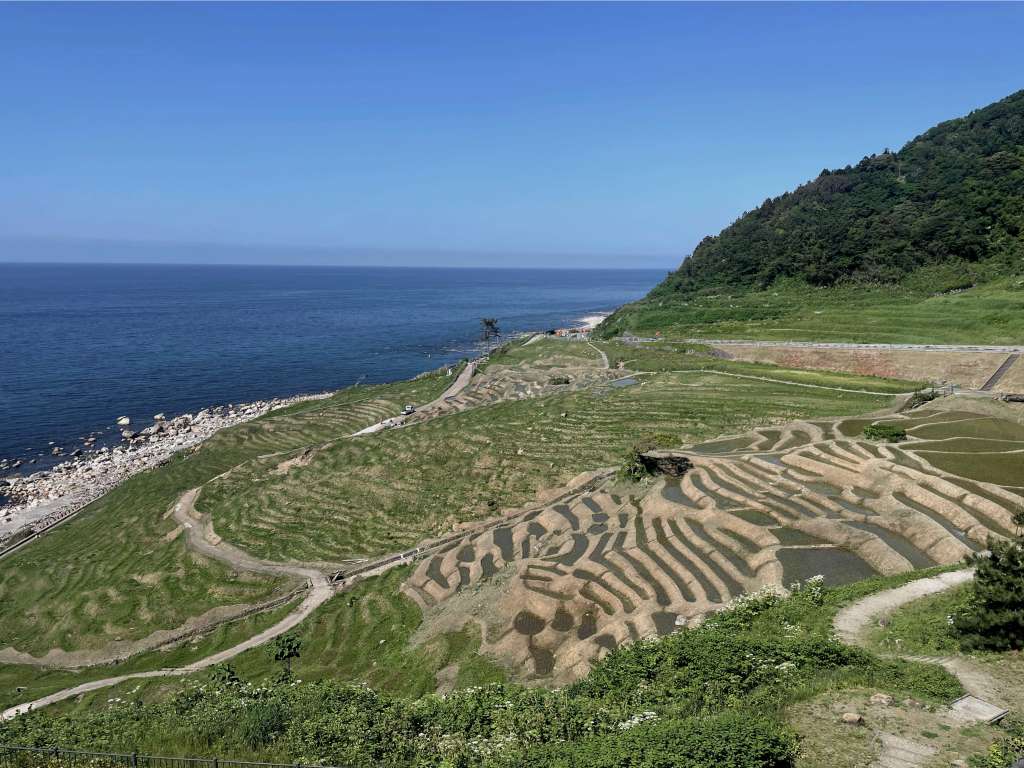
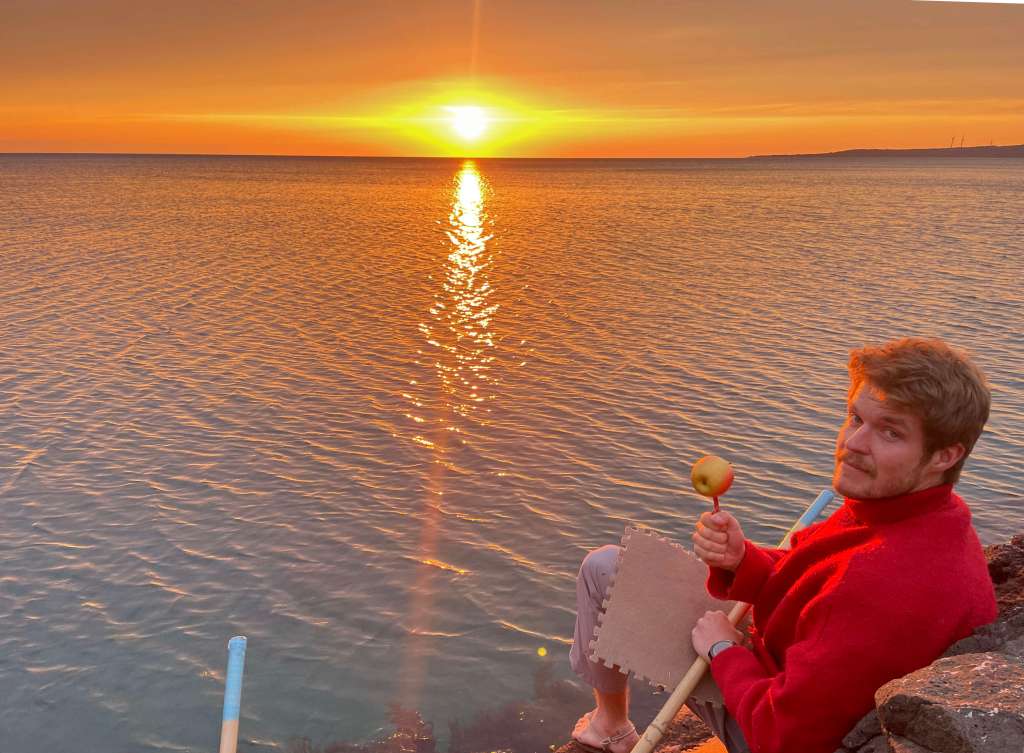
We spend almost two days on the little beach with a shrine in the water and even go for our first ocean swim of the year. After leaving, we realize it was a good idea to relax there as much as possible. The beaches along the peninsula are either beautiful but inaccessible due to rocky cliffs, or shadeless and with protection walls in the water, which make them a bit uninviting. On top of that, an earthquake in January 2024 had severely damaged the coast. We pass a lot of landslides, and constructions on the road are plentiful! A lot of holes and cracks in the roads have to be avoided. Therefore, we road trip slowly, stopping here and there for a nice view or a little walk. On the other side, we visit the Salt Village Museum, which is so interesting! Not only is there a detailed explanation about the production of salt in different periods, but you can also watch the workers while they go on with the salt-making production.
After spending quite a few days along the coast, we make our way to Kanazawa, a beautiful little town with an artisan craft background. Especially in the well-restored Geisha district, you can find all kinds of small shops with beautiful things. Geisha game experiences are offered as well, although you have to book in advance, which we didn’t know. We find a nice bakery and have lunch in one of the many gardens. A hawk draws circles above us. We have already made very close contact with one of them, when we had an open bag of chips between us and the bird crashed between us from behind, grabbing the bag and taking it with it. Unfortunately for him, the bag was open and the chips fell on the ground not even a meter from us. The 67-second rule applied in this case, but he did get to eat the leftover crumbs. After this experience, we were very cautious and warned a French couple who was eating on the bench next to us. But they did not expect the bird to grab the bento from their hand and were so relieved from eating their lunch, despite our warnings. Some things, you have to learn for yourself.
The second day in Kanazawa was grey and rainy. We visit the Zen Museum with an interesting display of D.T. Suzuki’s life and his contribution to Zen. We really enjoy it. We spend a few more minutes in the 21st Century Museum of Modern Art before heading to the Omicho Market. Stall after stall sells fresh fish and crabs. Some vendors offer sashimi in little Styrofoam cups. We eat the most delicious, freshest tuna and salmon sashimi and some grilled squid and octopus. It’s quite the experience! After 17 kilometers of walking, we get back to the car and spend the night on top of a little hill, overlooking the city.
It’s time to head towards Kyoto! We visit the Asakura Clan Ruins, a nice place in a valley close to Fukui. Barely anything remains from the houses, but it’s nice to stroll around. You can definitely see why the clan would have settled there. The greenery in the valley is beautiful. Later, we see a sign advertising a Washi paper village, which we follow. We end up making our own coasters from scratch! Washi paper is made of fibers from the plant kozo. The fiber of the plants is extracted and put into water. I got a screen to scoop up the fiber from the water. Then we added our decoration in the form of dried plants before adding another layer of fibers. Honza then sprinkled a lot of gold, and after drying the whole thing, we had six beautiful Washi paper coasters.
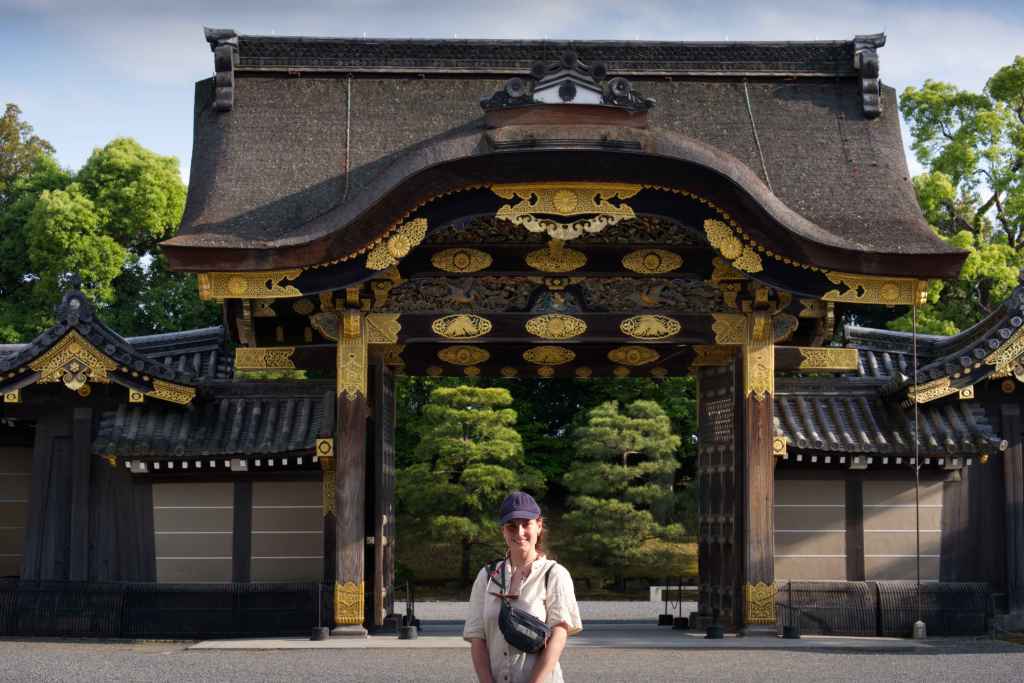


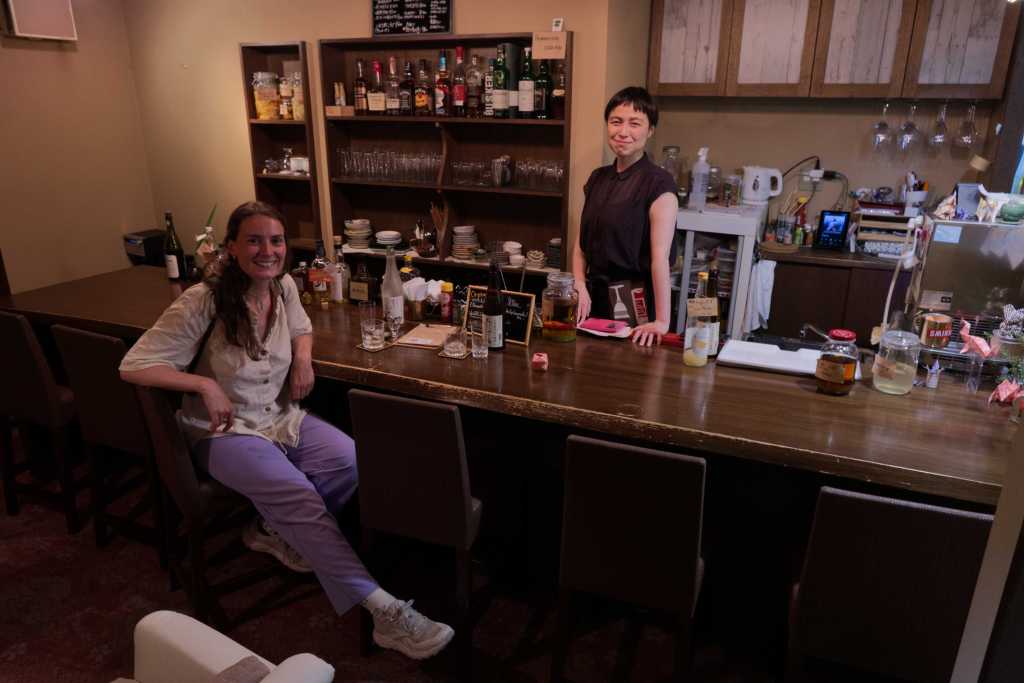

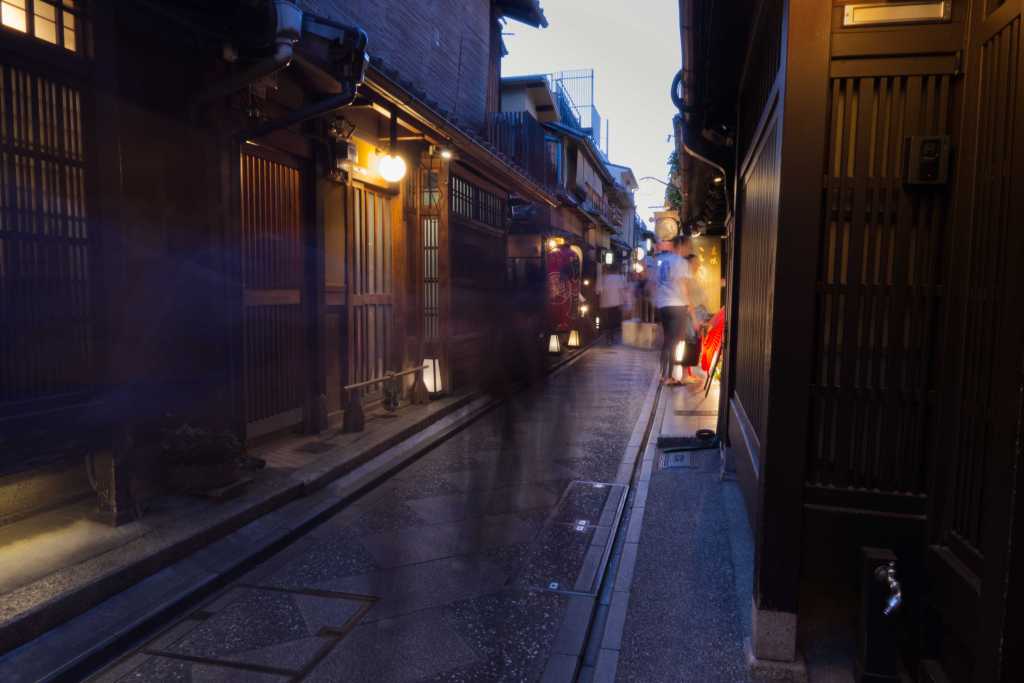
Kyoto is buzzing but we don’t find it to busy. Friends of us visit a few days later than us and report a lot of tourists. I guess we were lucky once more. We sleep on a hill above thei Geisha district and walk down into town. We walk along the philosophers path and multiple temples, visit Nijo castle with its beautiful artistic rooms and end up on pictures of a beauty contest with girls from each region Japans. They speak a bit of English and we talk about our journey. We even bump into a colleague from Hokkaido. The world is small after all. One night we have some very delicious sake at a lovely little hidden bar. We are the only customers and get taught the art of beginners Origami while chatting about life with the lovely girl behind the counter. When we leave Kyoto, we do so with the plan of selling RokkyPokky.
 The World for Us to See
Leave a comment