

With less than 2% of the total number of tourists, the Tohoku region, north of Tokyo, is one of the least touristic regions in Japan. Despite the low numbers, however, it is not little known. In 2011, the prefectures of Miyagi and Iwate were catapulted into the global media when a tsunami almost 40 metres high hit the coast of Iwate. Metre-high concrete walls designed to protect the coastal villages still characterise the coastal landscape today. Between awe and chill, we followed the coast a little along the Michinoku Trail, alternating walls, pine forests and villages, before starting our roadtrip.
Karaoke celebrities in Kazuno
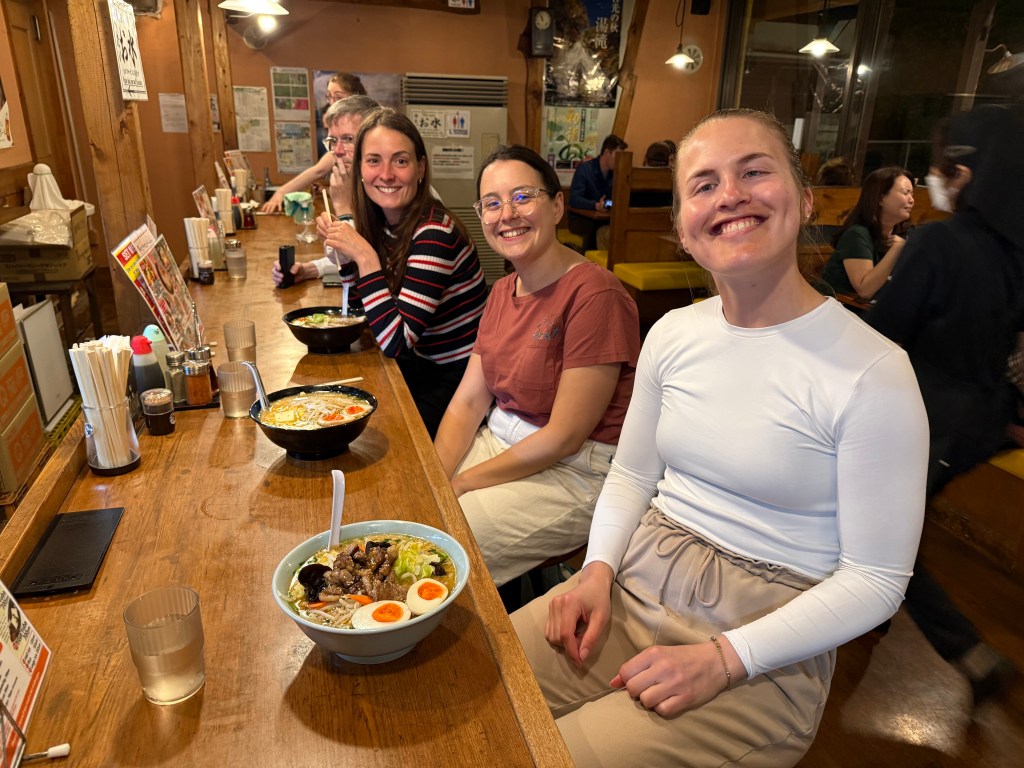
On the way south, where we will soon see Sophia, the rattling noise of our car becomes a problem. We end up in Kazuno, a small town. We just want to buy engine oil and hear from the mechanic that this noise is nothing important. But he doesn’t think so and tells us that it should be repaired as soon as possible. How important can a water pump be? Over ramen, we think about what to do. The accommodation around is expensive and the mechanic says it will take him up to three days to repair it. We ask the owners of the restaurant if they know of any cheap accommodation in the neighbourhood. They do! And call them directly. Unfortunately, it is already fully booked. So, without further ado, a tatami room above the restaurant is converted into a bedroom for us. We can stay for two nights and hand in our car. The mechanic also happens to be a friend of both of them. Our stay with Hiro-San and Kozue-San is a highlight of our trip to Japan. They speak a little English and invite us on an trip to Morioka.
During our lunch, they watch with amusement as we take on the local wankosoba challenge. A lady with a tray full of small bowls, each containing a mouthful of noodles, pours one after the other into our bowls in a continuous loop. The challenge demands that we eat continuously. I manage 54 bowls and Honza 122. The record is 735, unbelievable. We laugh a lot and the waitress seems happy to have some foreign customers.
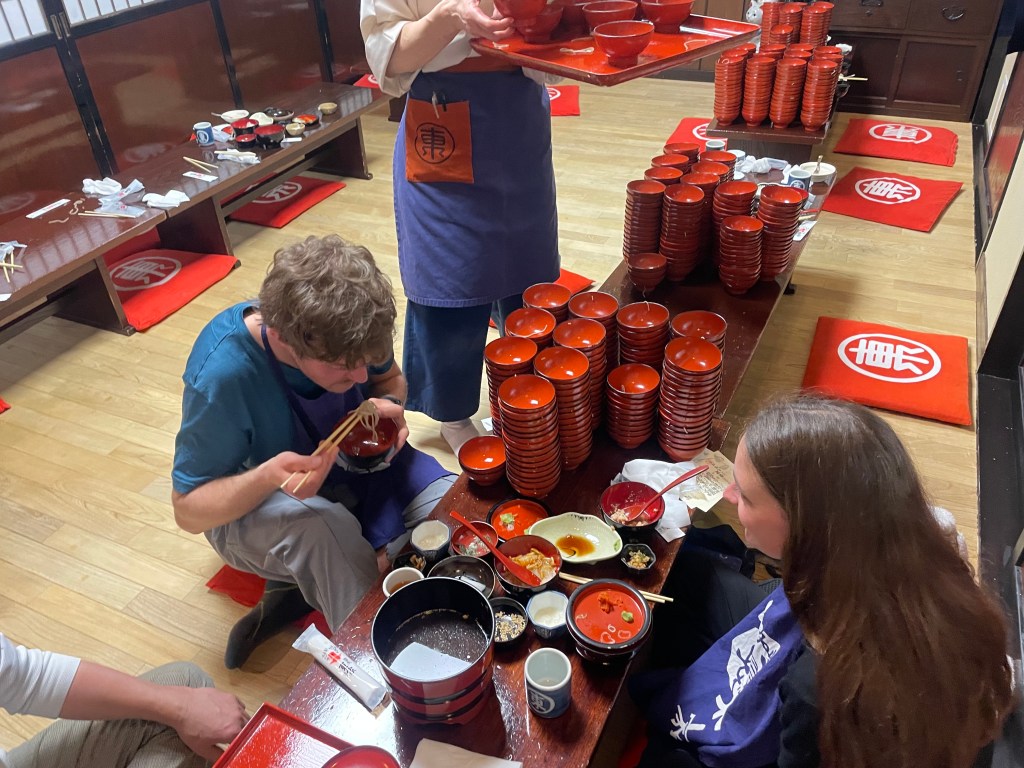
In the evening, Hiro-San and Kozue-San invite two friends over for a Japanese BBQ at their restaurant. The two friends are around 70 years old and come to the restaurant every evening. The night before, when we were served a multi-course meal, we had watched the neighbouring table jump up and bow very deeply and several times to the couple and had wondered if they might be a local celebrity. 24 hours later, we were having dinner with them, drinking wine and even ended up at a karaoke bar with our new friends. We don’t have as beautiful voices as our new friends, who show us old Japanese songs, but Honza and I sing Simon & Garfunkel anyway. At the end, we sing our favourite Japanese song, ‘carrying you’, together with Hiro-San. The hospitality and generosity of Hiro-San and Kozue-San is incredible. Our car is unexpectedly ready after just one day and we say goodbye full of gratitude.
Cherry blossom hunt in Tohoku
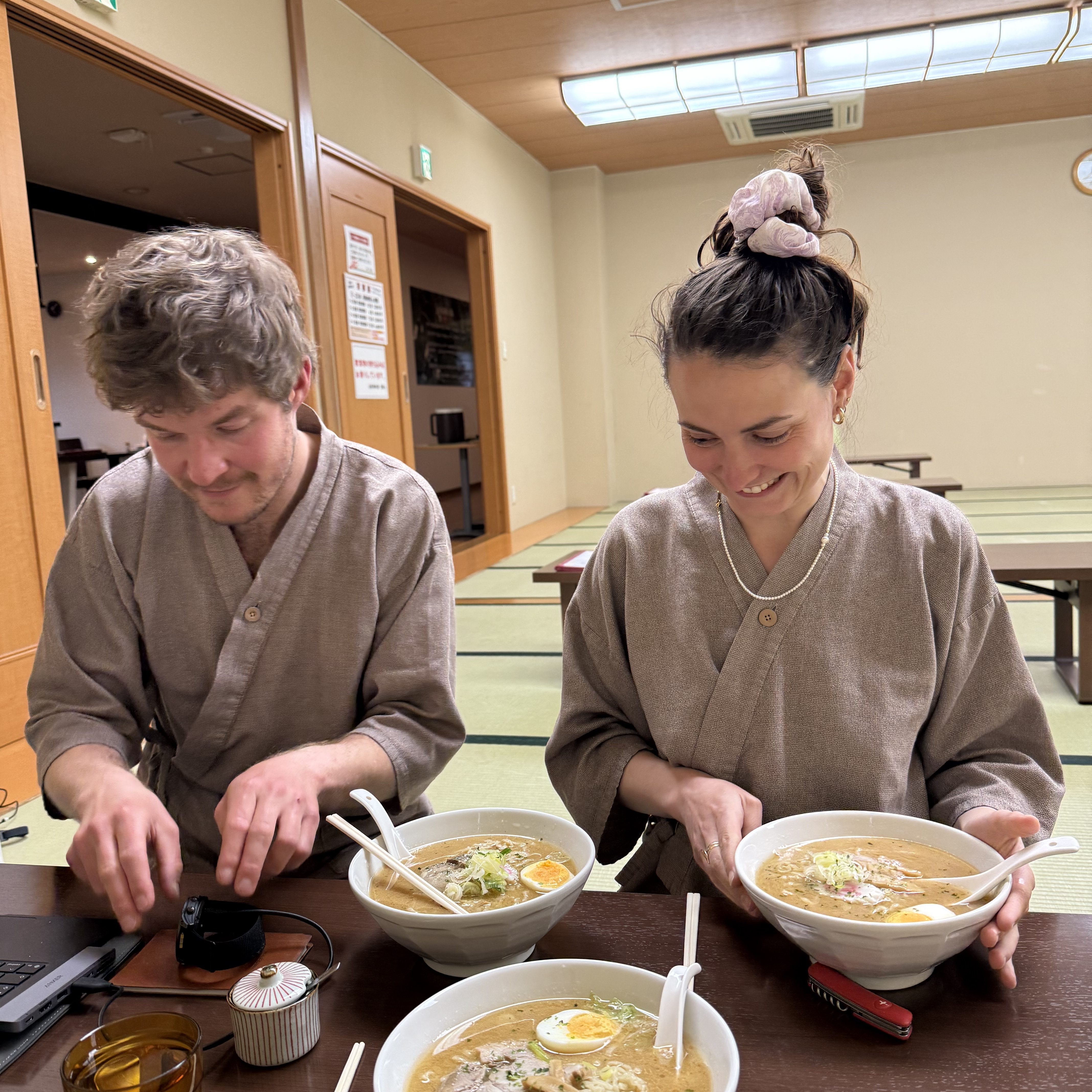
We pick Sophia up in Ichinoseki, the starting point of our cherry blossom hunt. It is raining and we decide to celebrate her arrival in an onsen. After all, she has travelled a long way and we had onsen on our agenda very soon. We alternate between the pools, cool off in the fresh April air and make ourselves comfortable in the tatami room with a ramen.
The next day, the sky has cleared. After our first cherry blossom pique-nique in the small park next to the Motsuji temple, we visit the temple complex and finally walk to the Chuson-ji temple. The city is full of cherry trees and they are in full bloom! It could hardly be any better. In the evening, we drive to another cherry blossom viewing point. An entire hillside full of trees transforms the place into a magical pink blanket.

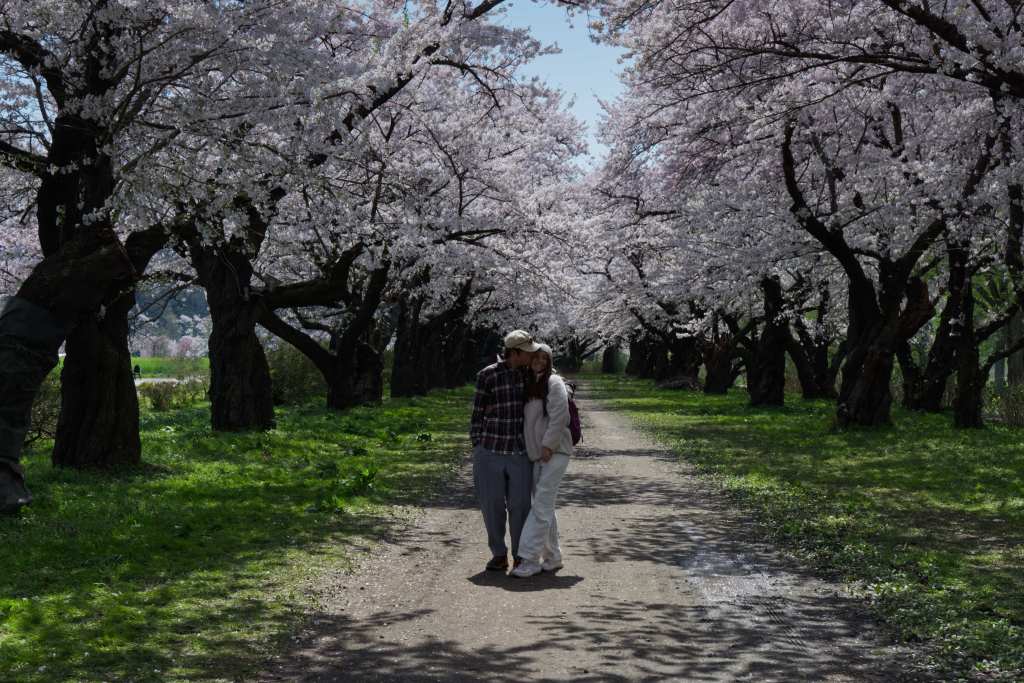
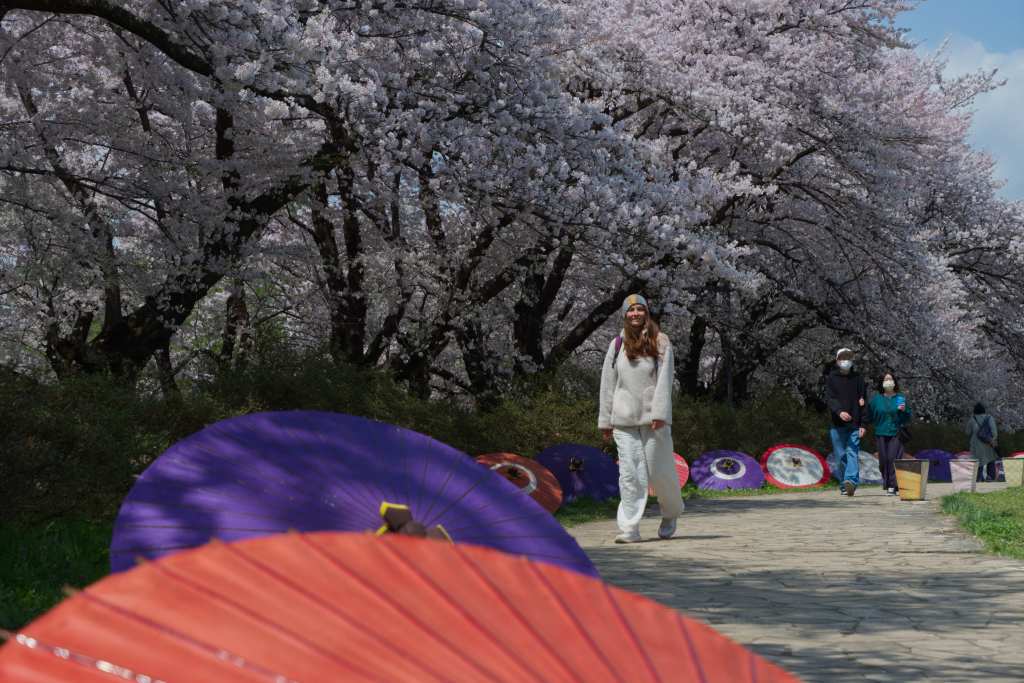
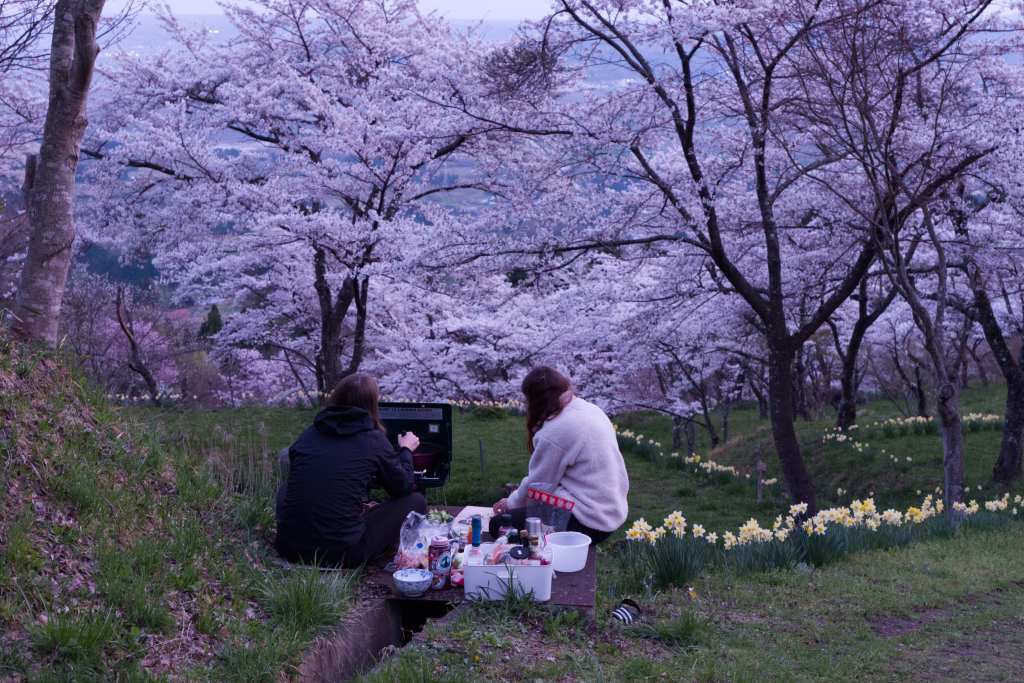
The next day, Sophia hides the Easter eggs she brought from Germany underneath it. In the morning, I search for them in the grass in the most beautiful decor. She visited us in Lapland around Easter last year and hid chocolate eggs for me there as well. I hope it becomes a tradition. When we set off, Kitakami Park, a little further north, is our main destination for the next day. Tree by tree, a beautifully blooming avenue of pink flowers stretches along the Kitakami River. On the meadows and under the trees, Japanese families sit in small groups on pique-nique blankets. They mainly eat bento boxes they have brought with them. Not far away, several food trucks are ready to serve hungry visitors with all kinds of food. We try a pancake-like roll with spring onions and mayo, a sausage, which turns out to be rice wrapped in bacon, and a Japanese kebab.
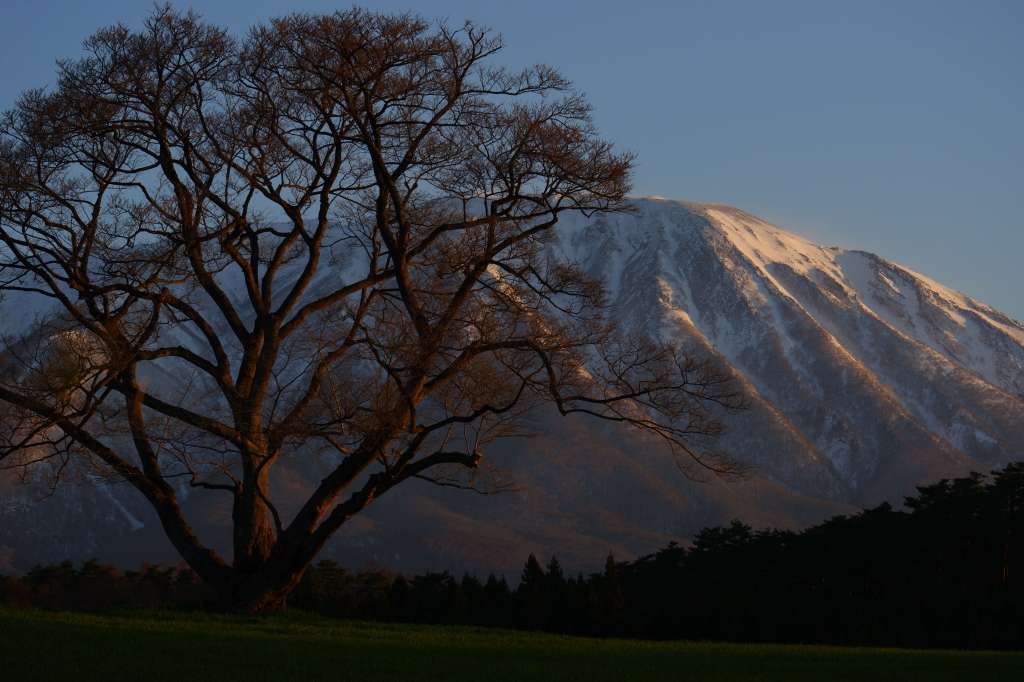
After an extended pique-nique under a – what else – cherry blossom tree, we walk a little through the town of Morioka, the town park and show Sophia the rock-splitting tree. We had already stopped at the tree on our first visit to the town with Hiro-san and Kozue-san. At that time, the blossoms were not yet fully open. The sky closes in the evening and we fall asleep to the sound of rain in a car park not far from Koiwai Farm.
It was still drizzling when we moved from the back of the car to the front in the morning and set off. In the mountains not far from Tazawa Lake, we bathe in the milky white waters of Kuroyu Onsen. This wonderful place has remained very traditional. The onsen does not have a shower, you rinse yourself with onsen water in a small washroom before entering the main pool. In the dining room there is a fireplace set into the floor, as we see the next day in the samurai houses of Kakunodate. This town is the best-preserved samurai town in Japan. Samurai house after samurai house is lined up along a wide avenue, here and there with a blossoming cherry tree. You can go inside some of them to catch a glimpse of times long gone. As Japan is mainly built with wood and from wood (iron was only brought to Japan later), and wood has to be constantly renewed, many old buildings are actually newer than you might think. After a few kilometers on the road, we visit Yokote Castle and after a delicious spicy ramen, we cover our longest distance so far.
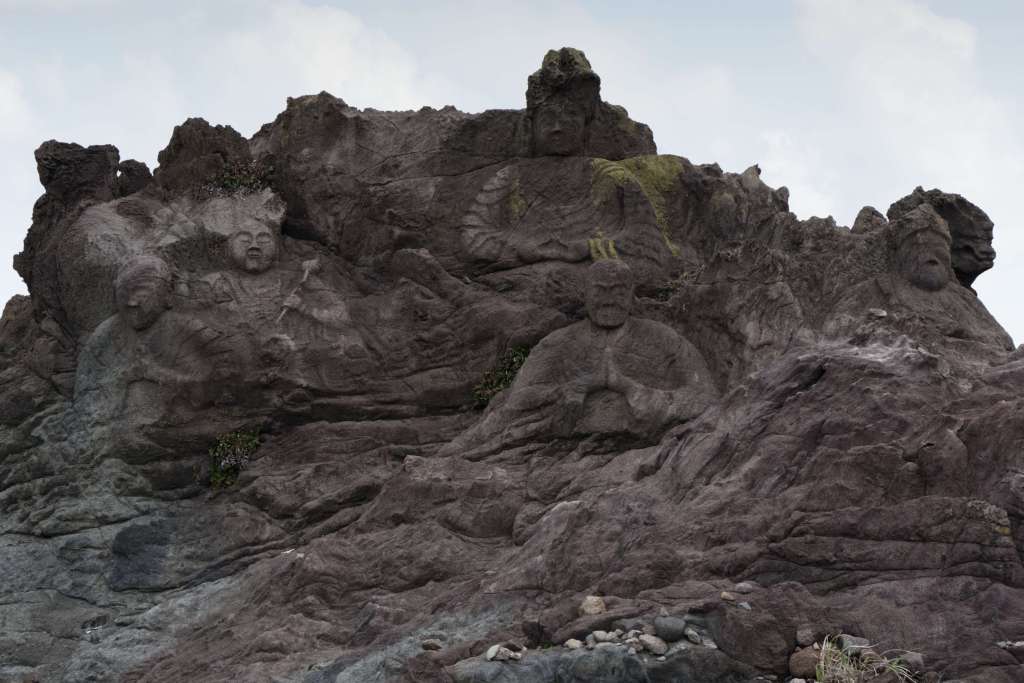
Honza and Sophia have no idea what awaits them at our destination. We arrive 20 minutes before sunset and walk to the beach, where I leave them to search. After a while, Sophia is the last to spot them. Sculptures have been carved into the rocks on the beach. They stand there like sentinels, unperturbed by the -very heavy- surf.
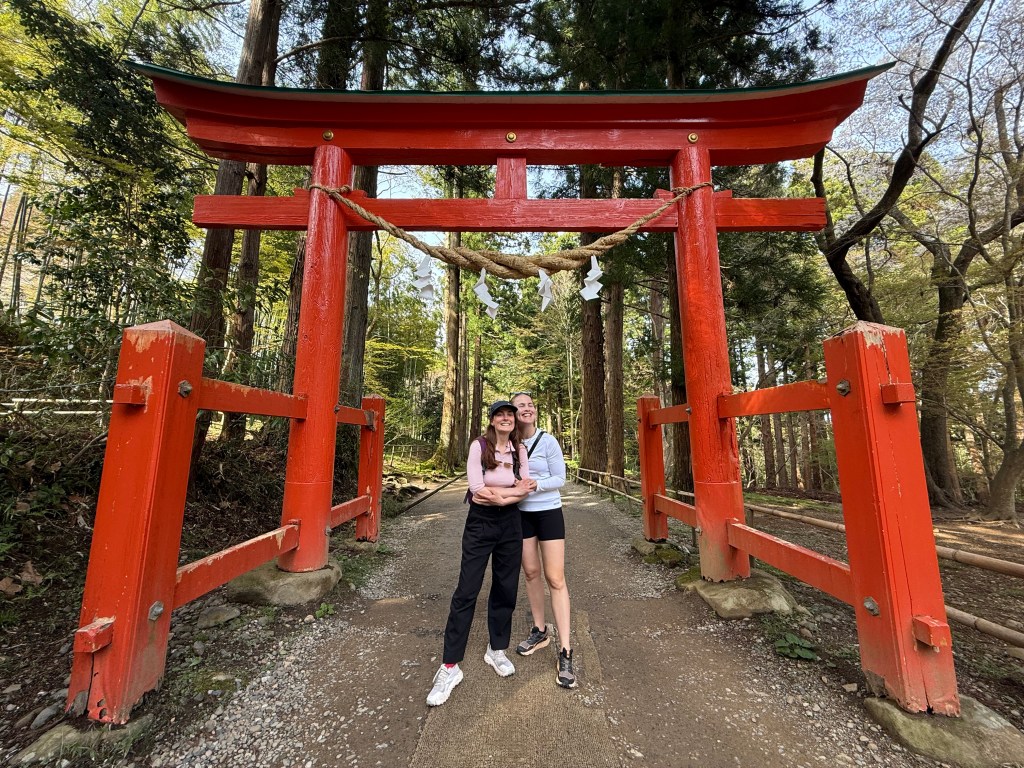
After this short detour to the coast, we head back inland the next day. We walk up the 2,446 steps to the Dewasanzan temple and make an offering of 100 yen at the shrine to the god of healthy legs and safe travelling. Safe is safe. Every Japanese person throws money into a box in front of the temples and shrines, usually between one and 100 yen. They then bow, often clapping their hands twice to ward off evil. Then they bow again for a few seconds.

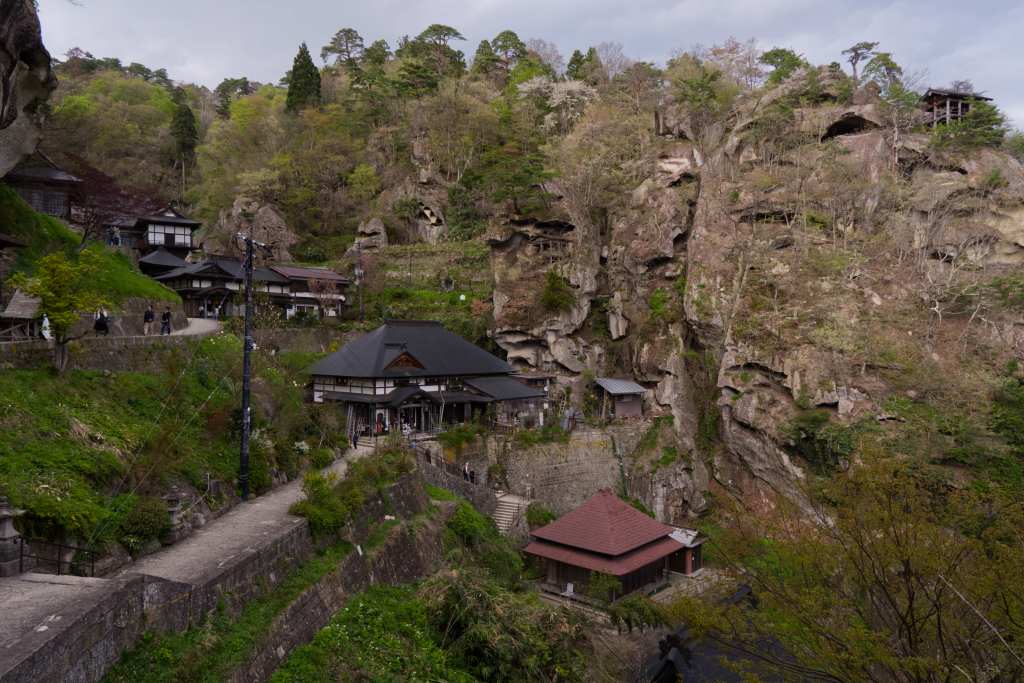
The next day we explore another famous temple, the Yamadera Temple. It towers high on a rock above the town. There are only 1,000 steps to climb to the top. The age of some of the pilgrims is quite astonishing. Some older people walk up the steps for this short ceremony of bowing, despite having difficulty walking. In Yamadera, we overtake a old old old lady with a walking stick halfway up. We meet her again at the top of the main temple. Although we were faster, we enjoyed the view and visited various smaller temples and worship figures while the lady walked slowly but steadily straight to the main destination. We are impressed.
The day before Sophia’s birthday, we are at Lake Inawashiro. We walk past some of the 300 ponds that were formed here after the eruption of Mount Bandai. The weather is still reasonably good and we can see the water in the most beautiful shades of blue. The next morning, the birthday girl wakes up to heavy rain and gusts of wind. The birthday pancakes are therefore prepared and served in RokkyPokky. The three of us and the gas cooker make it cosy. After onsen and cake, we end up in an izakaya. The owners are very nice and even speak a little English. Our table neighbours are very talkative too and we communicate as best we can. As we spread miso on our grilled aubergines, we seem to set a new trend that sweeps the whole room away. Always those tourists. Later, when the owner hears that it’s Sophia’s birthday today, she invites us for an ice cream. As we leave, the entire restaurant bids us farewell. It was quite the beautiful experience. Only 4 days separate Sophia’s and my birthday. My sister Amelie joins our little party in Nikko, where we plan to spend a few nights. Nikko is known for its world heritage tempels. Ironically, we do not visit them with the girls, instead spending time eating Ramen, shopping on a rainy day and introducing Amelie to the wonder that is Hamasushi.
On the third of May, I follow Sophia into our new decade. Honza and the girls have the whole day planned. We drive to Chūzenji lake where they prepare me the best birthday brunch including Honza and my little tradition: Nutella-pancake cake. If you use tortilla wraps instead of pancakes, you got yourself an easy-to-make trail cake! Later we do a little hike, before heading back to the town.


I have to close my eyes and when I am allowed to open them again, we are sitting in a cheese cake cafe and a looot of people are singing happy birthday. Honza got the whole place to sing. At night, we drive to an Izakaya for dinner. They are closed and Amelie jockingly starts to sing our Hamasushi song. And guess where we ended up? Eating delicious sushi two evenings in a row. After this beautiful day, our Tohoku trip comes to an end. The day after Amelie catches her flight back to Europe, while Honza, Sophia and me drive into Tokyo, where she will catch a flight in a few days.

 The World for Us to See
Leave a comment