
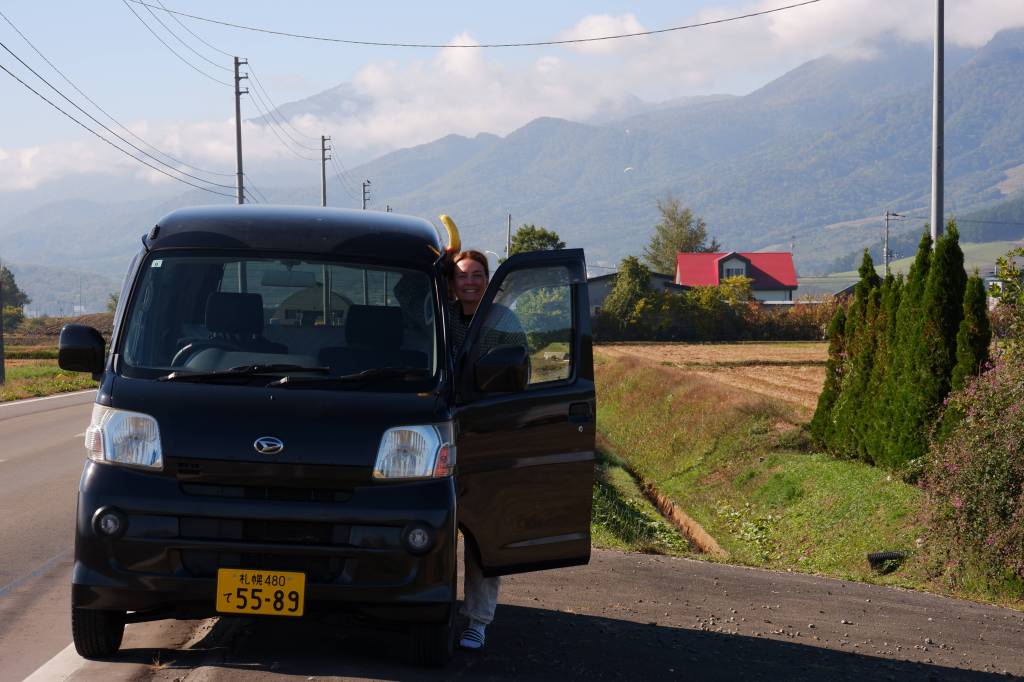
Hokkaido is Japan’s northernmost island and home to wild nature and lots of National Parks. Due to its number of remote areas to discover, it’s perfect for a road and hiking trip. We spent two weeks before the start of the winter season in Niseko, exploring the island.
Shakotan Peninsula
The Shakotan Peninsula, west of Otaru, holds new experiences for us. We stop in the town of Yoichi on a grey, rainy afternoon and head to the local onsen. The first impression is odd. The entrance area looks more like a storage room. An elderly couple is trimming grape stems and packing them into boxes. In between, there’s a counter plastered with posters, behind which a barely visible Japanese man is taking payments. The entry fee is 490 yen, which is about 3 euros. We shrug and decide to give it a try. Onsens have a long tradition in Japan, and are typically separated by gender. In my section, an elderly Japanese woman introduces me to the art of the onsen. For washing, there is a row of showers with little plastic stools and a flat bowl. Most of the people here are elderly women, and some actually come just to use the public bath for washing. They take the cleansing process very seriously and spend a lot of time on it. To wash their hair, they fill the bowl and pour it over their heads. There is also a sauna, and surprisingly, there’s a TV for entertainment inside.
The water comes from hot springs, which are found almost everywhere due to intense volcanic activity. Because the water is untreated, the initial cleansing is particularly important, as no chemical products are used. I slowly lower myself into one of the pools and nearly scald myself. It takes me some time to sit down. A little while later, a Japanese woman plunges in up to her neck without flinching. I assume it’s something you get used to.
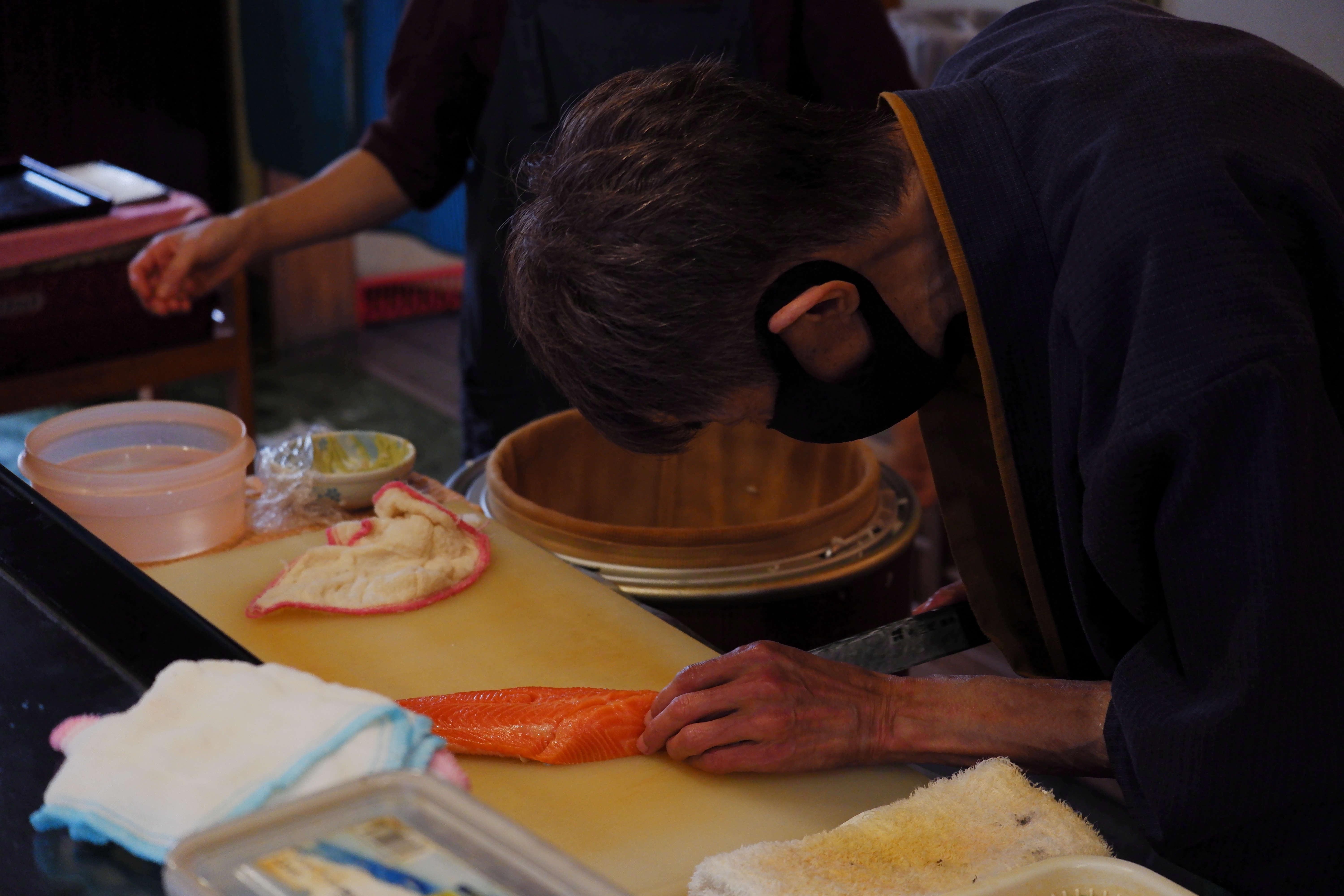
Later, we stroll through the town and find a restaurant with a sushi counter. An elderly Japanese woman seats us and calls her husband, who then prepares the food right in front of us. We are the only guests, and we are grateful for it. For some inexplicable reason, that day, we are utterly embarrassing ourselves with the chopsticks. Fortunately, the couple is busy and doesn’t notice us. The sushi and the fishbowl, are absolutely delicious. The fish melts in your mouth, and the sea urchin dissolves like butter. For the most part, we have no idea what kind of fish we are eating, but it tastes amazing nonetheless.


Daisetzusan National Park
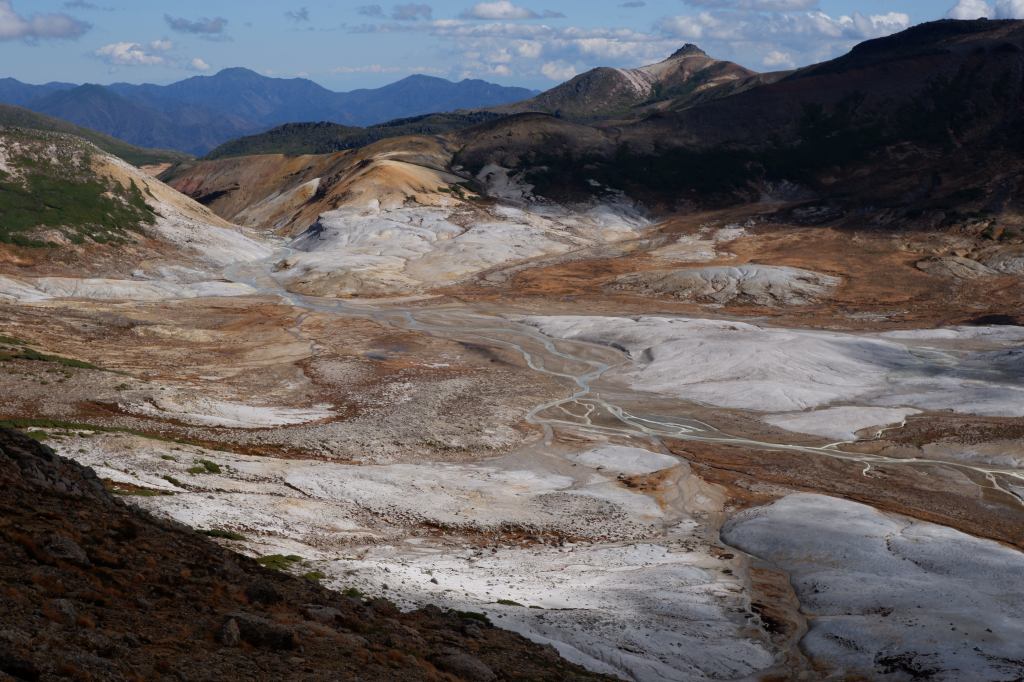
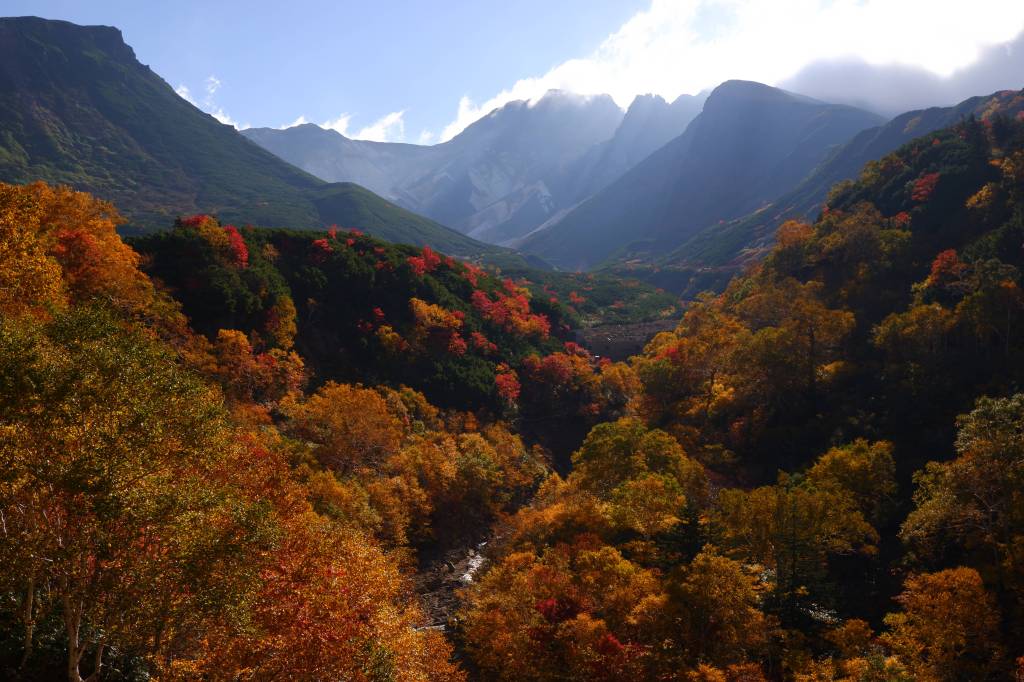
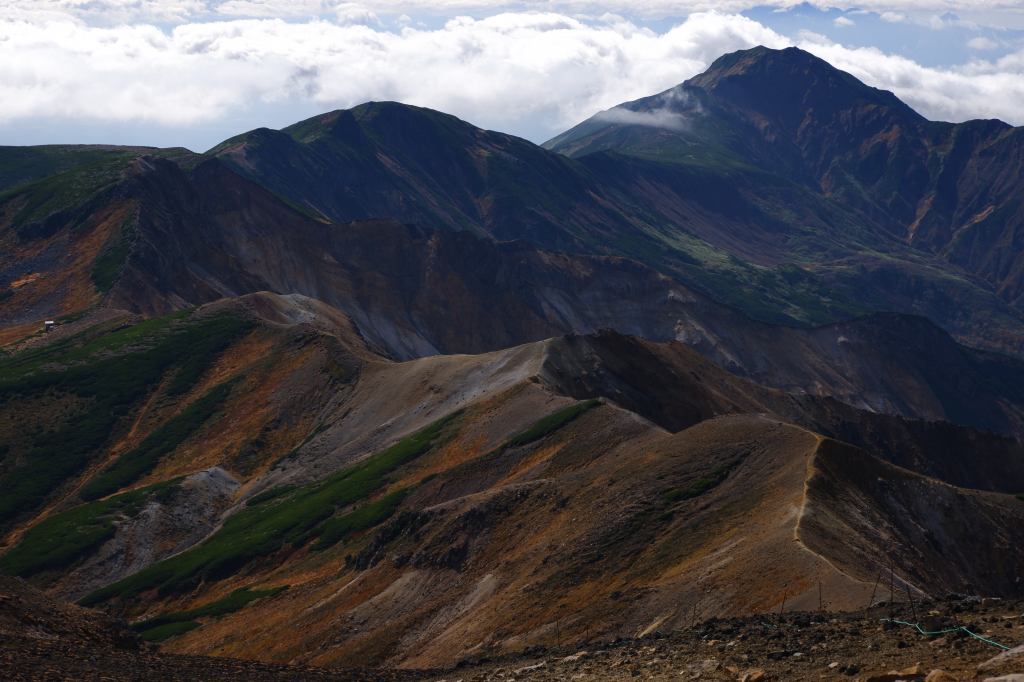
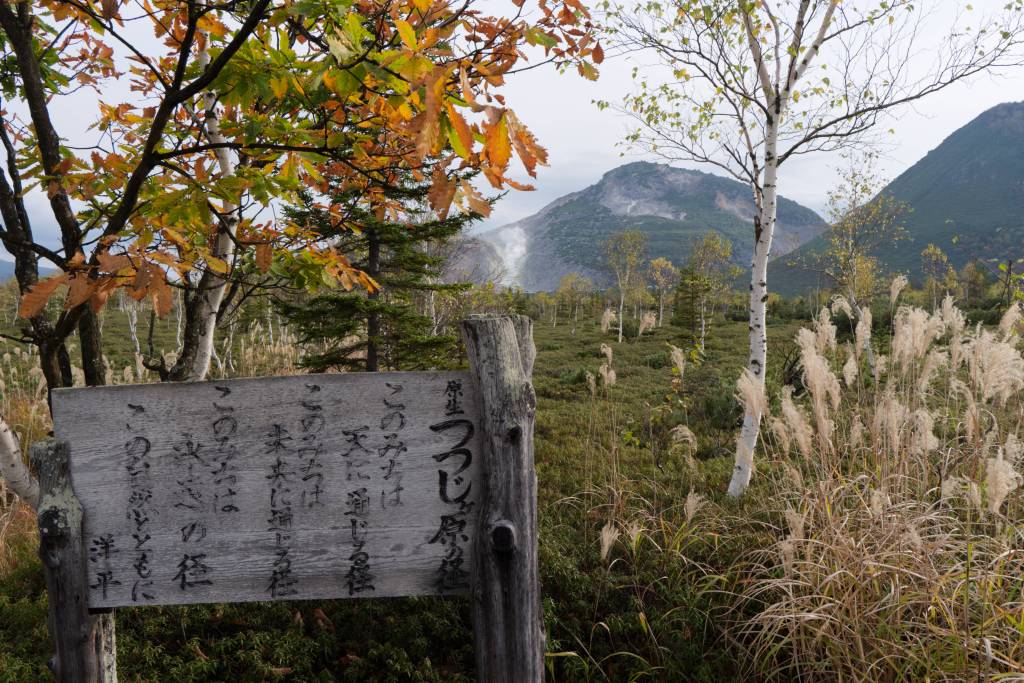
With our Hijet Cargo named Rokkypokky, we’re off to Daisetsuzan National Park, passing along the beautifully colorful flower fields in Furano. We sleep at the trailhead of the Tokachi volcano and wake up in the morning to a colourful autumn. The sun is shining, and as usual, the Japanese start their hike at 5:45 with their bear bells, while we set off a few hours later. The trail up is pleasantly steep. The surroundings shift from bright red, yellow, and orange trees to green bushes, and eventually volcanic rock. To the left, columns of sulphur smoke rise from the earth, and to the right, you can see far to the south. Once we reach the top, we can see a large part of Daisetsuzan National Park, and since the locals set off much earlier, we have the summit to ourselves.
We decide to extend the hike and climb Mount Biei before heading back down. Time management isn’t our strong suit, but we have a knack for knowing when a headlamp might be needed. So, we reach Rokkypokky after nightfall but at least with light. The next morning, we relax in the onsen next to the car park, with an outdoor bath and a view of the mountains speckled with colourful patches. Not too bad at all. The weather is supposed to turn bad over the next few days, so we’ll be celebrating Honza’s birthday in a cosy way, in the car.
After this bit of luxury, we head to Mount Asahi, bid farewell to RokkyPokky, and start our hike up the mountain. Most people take the very convenient gondola, spend a few minutes walking a nice wooden path loop, and then head back down the same way. But not us! The trail is very wet, and we arrive at the top gondola station later than expected, leaving us no time to make it to the campsite over the mountain. We wait until the last gondola leaves, and then explore the place, which had now taken on a magical atmosphere. The sulfur smoke, a beautiful dark orange sunset, the clouds parting like theatre curtains to reveal a glimpse of the mountain range behind and the volcano above us. We (more or less) set camp in an emergency hut—the night is freezing, and the sulfur smell is very strong.
At 4:20, we get up and begin the ascent of Asahidake. The sunrise was stunning; the wind, a challenge. We gobble up our breakfast muesli on top and hike down the other, steeper side. Twenty kilometres and a beautiful trek later, we are reunited with RokkyPokky, and, with my last bite of rice, I fall asleep. Lucky I have Honza for the dishes.


Akan National Park
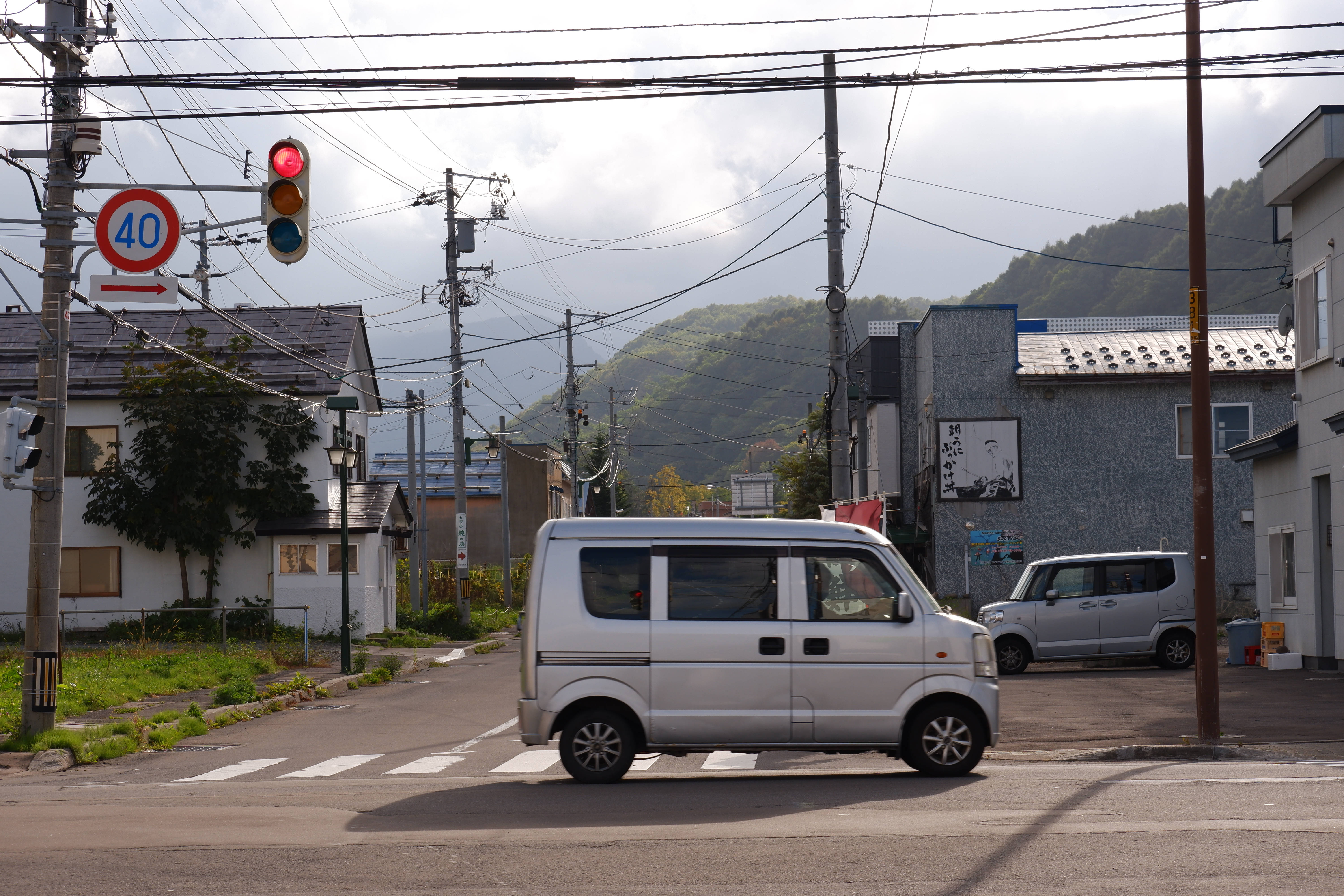
We pass by many small construction sites. At each one, the same scene unfolds. Instead of the usual temporary traffic lights used in Europe, Japan stations a person at the beginning and end (sometimes even in the middle) to direct traffic with a red and white flag. We’re waved through with the white flag, and the worker bows. After days of experience, we bow back in sync. Although bowing is common in every interaction in Japan, it still surprises us that even driving includes it. Instead of raising a hand to say thank you, drivers’ heads briefly disappear behind the steering wheel. This doesn’t quite align with Japan’s usual emphasis on safety.
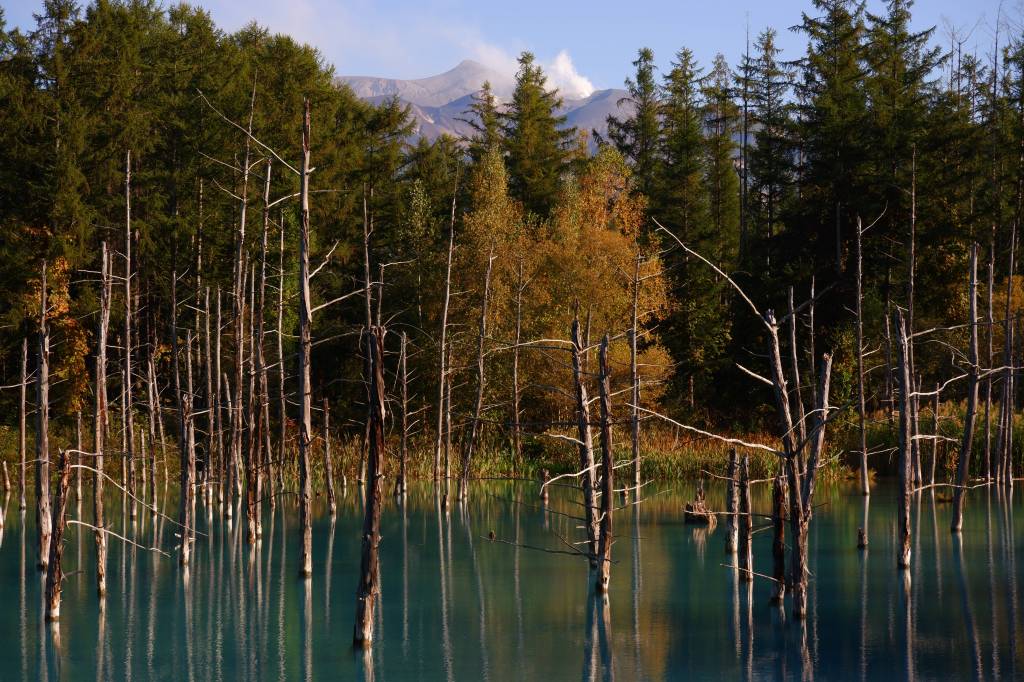
Akan National Park is more of a car park. There are a few hiking trails, but none appeal to us, so we spend the morning at a natural onsen, switching between the hot spring and the cold lake water next to it, going for a walk, and chasing sunsets. We don’t stay long. The atmosphere isn’t quite to our taste. People mostly get out of their cars to take photos and drive off again. There aren’t really any places inviting enough to spend a few hours. We linger a bit longer on one beach. Beneath the sand are hot springs, and if you dig deep enough, you can make a small hot tub for a footbath. The water is sometimes scalding hot.

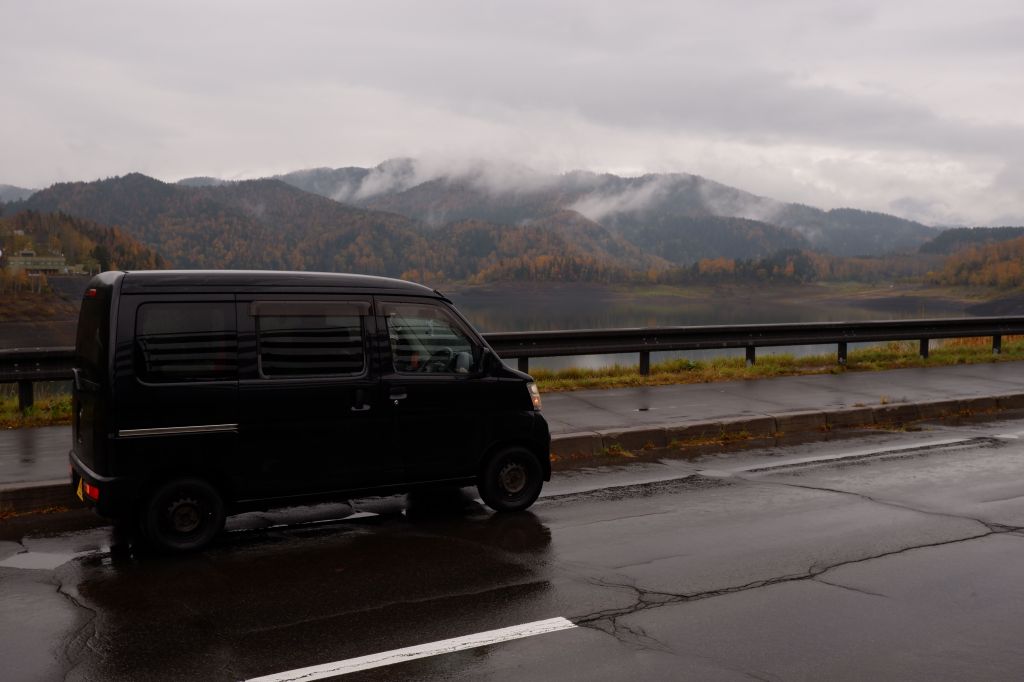
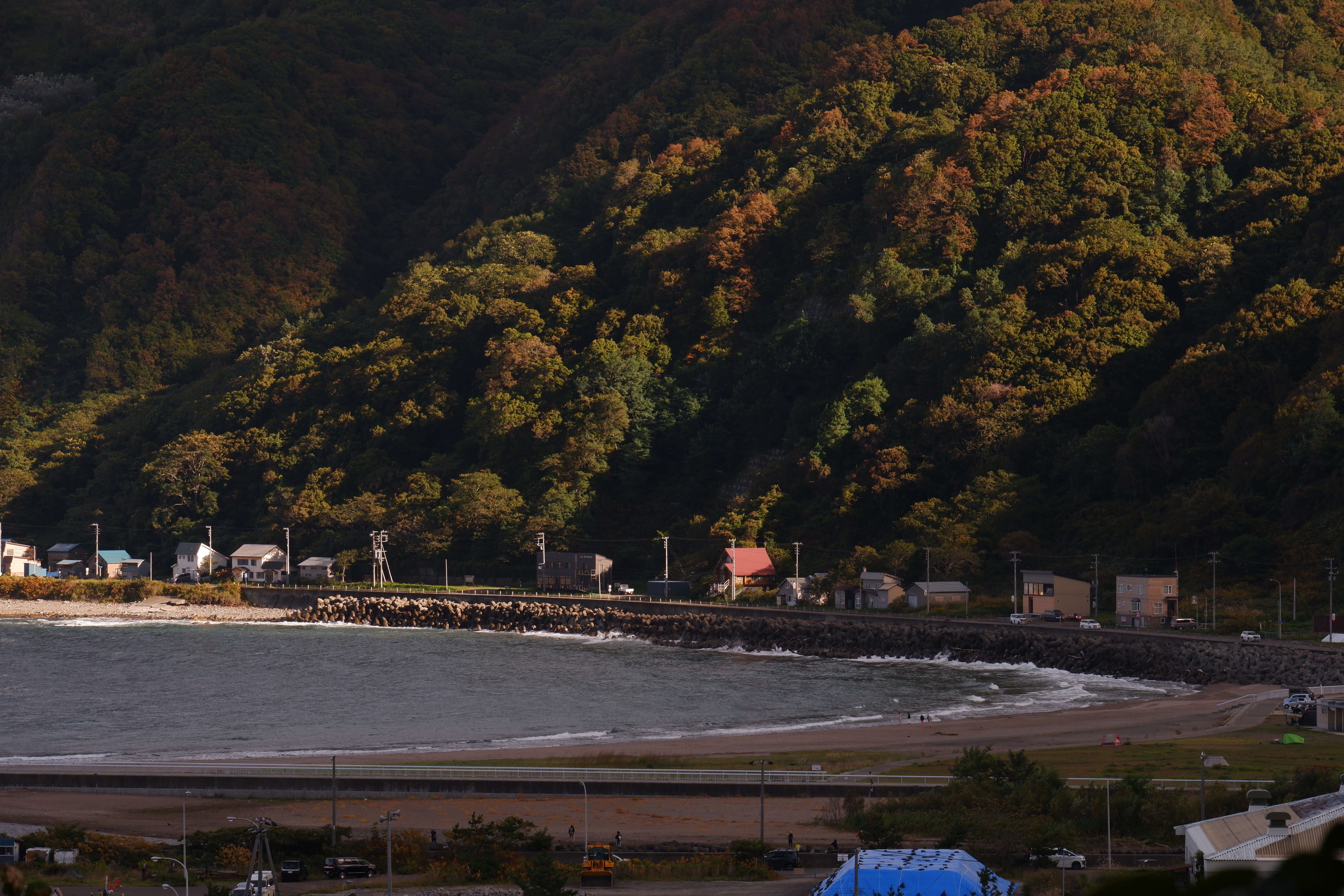
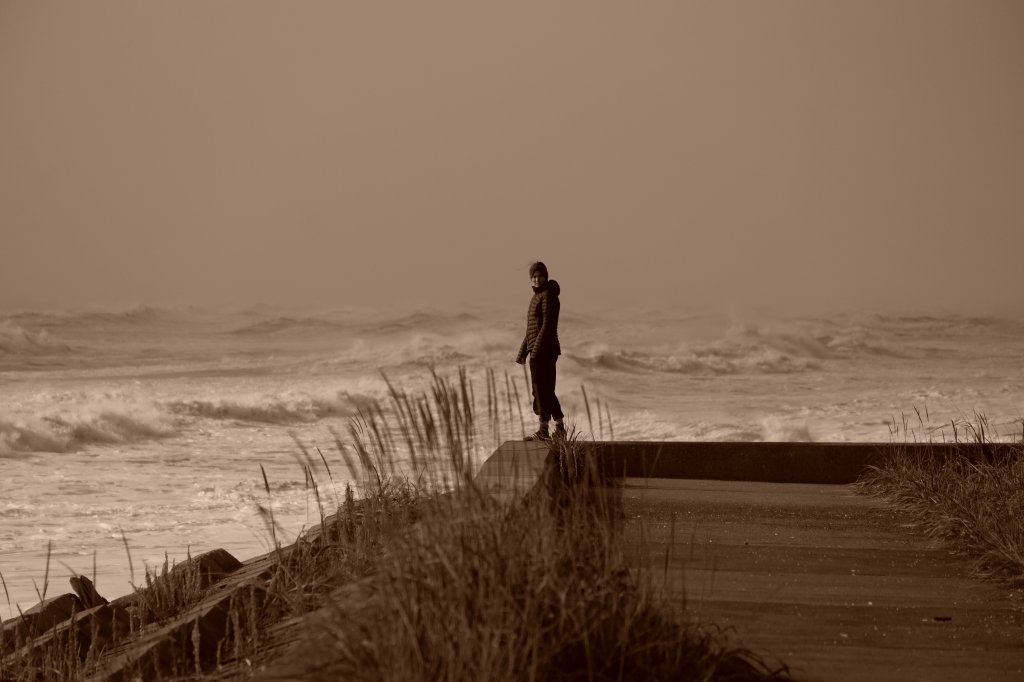
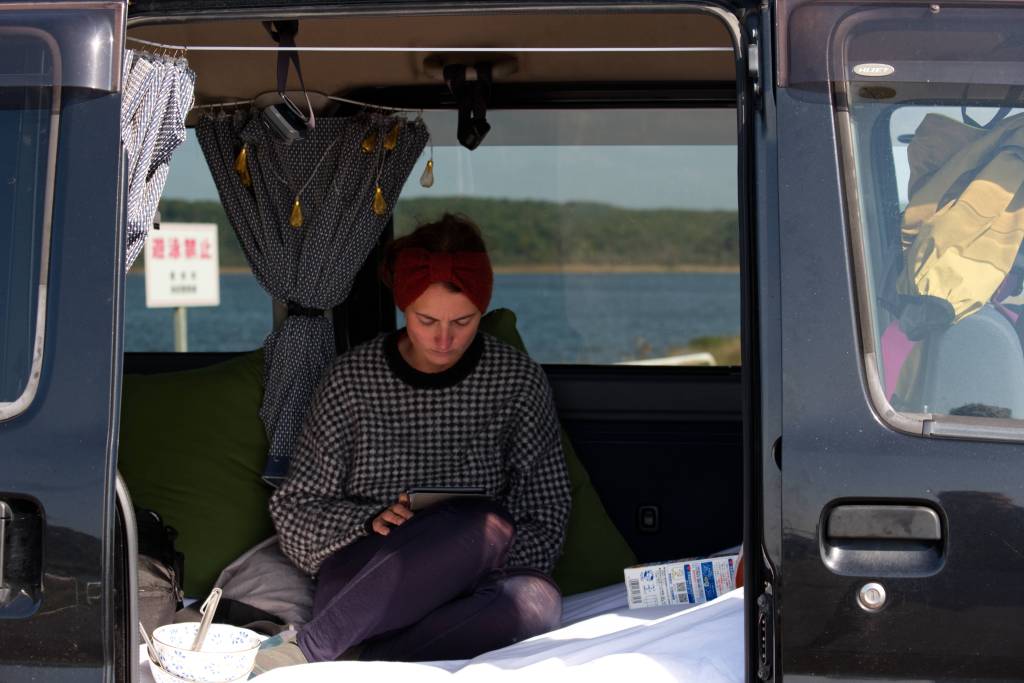
We spontaneously head south along the coast. The eastern coast is somewhat bleak. The omnipresent tsunami warning signs and the old, mostly uninhabited shacks don’t exactly add to a beach vacation vibe, especially on this cloudy day. We sleep on a beach, with big waves thundering all night. It’s a bit unsettling. However, the next day is sunny and beautiful, making everything feel less ominous. After a short yoga session, we continue on. Later in the day, we move from the east coast to the south coast and immediately notice the difference. Here, there are proper houses, even small towns, and the waves are smaller. This area seems less threatened, though breakwaters line the entire coast. Once again, we sleep by the water, take a morning walk, and enjoy oatmeal with the sound of the sea. For the rest of the day, we spend time in nature at Shikotsu National Park, before making our way to Niseko.
 The World for Us to See
Leave a comment